
Ecuador: landmarks, animals & facts for kids
2 landmarks · 1 animal
Ecuador on My Earth Toy, the free 3D toy globe for kids: 2 landmarks, 1 animal. Here you can see its flag, capital and size, then fly to every place on the globe.
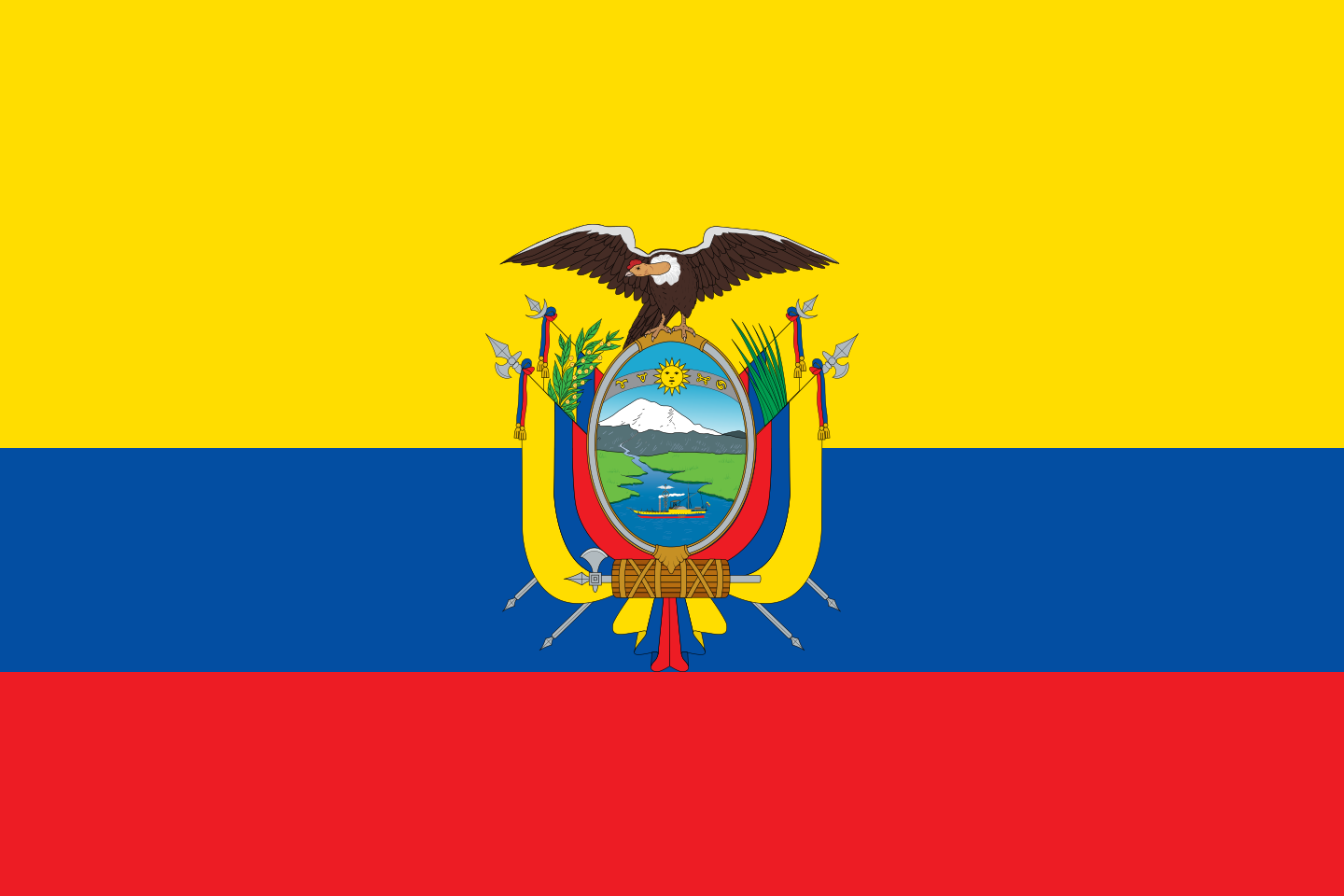
Ecuador's flag has three horizontal stripes, a wide yellow one on top, then blue and red, with the national coat of arms in the centre.
Read about this flag →Ecuador at a glance
- Capital
- Quito
- Continent
- South America
- Area
- 283,561 km²
- Population
- 18.1 million
Ecuador is a country on the northwest coast of South America, named after the Equator, which runs right through it. It is bordered by Colombia and Peru and includes the Galápagos Islands far out in the Pacific Ocean. Its capital is Quito, high in the Andes, and about 18 million people live in the country. Ecuador is known for its volcanoes, rainforest, unusual wildlife, roses and bananas.
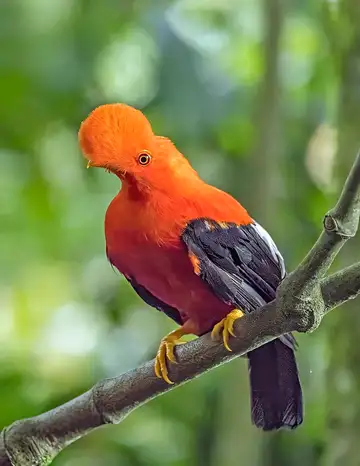
On My Earth Toy you can visit the Galápagos Islands, famous for giant tortoises and marine iguanas, and Cotopaxi, a snow-capped, almost perfectly cone-shaped volcano. Look for the Andean cock-of-the-rock too, a bird with a brilliant orange crest.
Geography and nature
Ecuador has four regions: the Pacific coast, the Andes highlands with an 'avenue of volcanoes', the Amazon rainforest in the east, and the Galápagos Islands. Chimborazo, its highest volcano, is about 6,260 metres tall. Cotopaxi, at about 5,900 metres, is one of the highest active volcanoes in the world. The Galápagos inspired Charles Darwin's ideas about evolution after his visit in 1835. Yasuní National Park in the Amazon is one of the most species-rich places on Earth.
People, languages and culture
Spanish is the official language, and Kichwa and Shuar are also official languages for relations among cultures. Most Ecuadorians are mestizo, of mixed Indigenous and European heritage, and there are many Indigenous and Afro-Ecuadorian communities. Markets like the one in Otavalo are famous for colourful textiles. The so-called Panama hat is actually woven in Ecuador from toquilla straw, and the craft is recognised by UNESCO. Ecuador uses the US dollar as its currency.
History in a nutshell
Many Indigenous cultures lived here before the Inca Empire took over the highlands in the late 1400s; Quito became an important Inca city. Spain conquered the region in the 1530s. After the Battle of Pichincha in 1822, Ecuador was freed from Spanish rule and joined Gran Colombia, then became a separate country in 1830. In 2008 its constitution became the first in the world to recognise the rights of nature.
Fun facts
- Because the Earth bulges at the Equator, the top of Chimborazo is the point on Earth's surface farthest from the planet's centre.
- Quito's historic centre was one of the first places added to the UNESCO World Heritage List, in 1978.
- Galápagos giant tortoises can live for more than 100 years.
- Marine iguanas of the Galápagos are the only lizards in the world that feed in the sea.
Famous landmarks in Ecuador
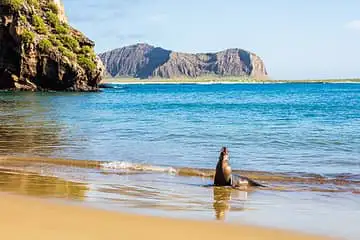
Galápagos Islands
Ecuador · South America
Volcanic islands with unique wildlife that helped inspire Darwin's theory of evolution.
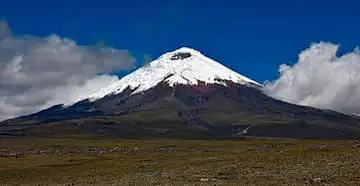
Cotopaxi
Ecuador · South America
A snow-capped, symmetrical stratovolcano and one of the highest active volcanoes in the world.
Animals in Ecuador
Questions
What is the capital of Ecuador?
The capital of Ecuador is Quito.
Which continent is Ecuador in?
Ecuador is in South America.
How big is Ecuador?
Ecuador covers about 283,561 km².
How many people live in Ecuador?
About 18.1 million people live in Ecuador.
What are the most famous landmarks in Ecuador?
Some of the best-known landmarks in Ecuador are Galápagos Islands and Cotopaxi. My Earth Toy has 2 landmarks from Ecuador on its free 3D globe, each with a photo and quick facts.
Which animals can you find in Ecuador on My Earth Toy?
On the globe you can find Andean cock-of-the-rock in Ecuador.
Sources
Updated: 2026-10-30