
Kazakhstan: landmarks, animals & facts for kids
2 landmarks · 2 animals · 1 place to discover
Kazakhstan on My Earth Toy, the free 3D toy globe for kids: 2 landmarks, 2 animals, 1 place to discover. Here you can see its flag, capital and size, then fly to every place on the globe.
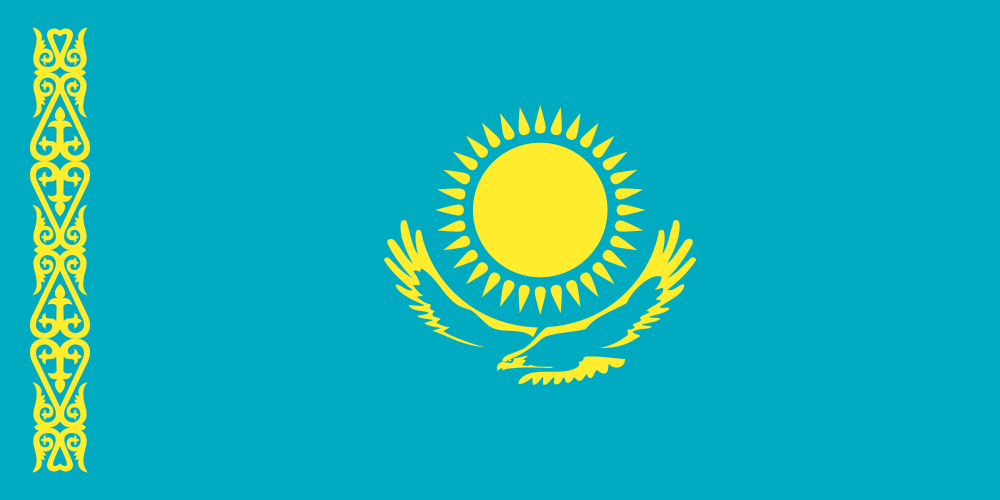
A sky-blue flag with a golden sun of 32 rays above a soaring golden steppe eagle, and a golden ornament pattern running down the side by the flagpole.
Read about this flag →Kazakhstan at a glance
- Capital
- Astana
- Continent
- Europe and Asia
- Area
- 2,724,900 km²
- Population
- 20.6 million
Kazakhstan is a huge country in Central Asia, stretching from the Caspian Sea in the west to the Altai Mountains in the east, with a small part west of the Ural River counted as Europe. It is the largest landlocked country in the world and the ninth-largest country overall. Its capital is Astana, and its biggest city is Almaty. Kazakhstan is known for endless grassy steppes, nomadic traditions, golden eagles used for hunting and the spaceport from which the first human flew into space.
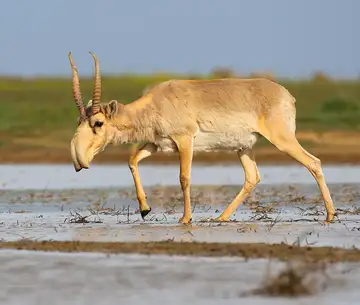
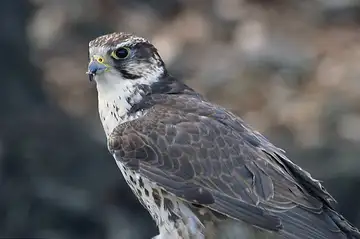
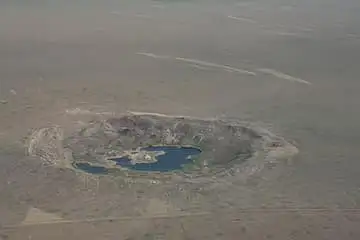
On My Earth Toy you can see the Baiterek Tower in Astana and the Baikonur Cosmodrome. Look for the saiga antelope with its big floppy nose and the saker falcon, and discover the former Semipalatinsk nuclear test site.
Geography and nature
Most of Kazakhstan is flat steppe and desert, but the south and east rise into the Tian Shan and Altai mountains, where Khan Tengri reaches 7,010 metres. The country borders the Caspian Sea, the largest lake on Earth. Lake Balkhash is unusual: its western half is fresh water and its eastern half is salty. Winters are very cold and summers hot. Wild apple forests grow in the hills near Almaty, and scientists think the apples we eat today first came from this region.
People, languages and culture
Kazakh is the state language, and Russian is also official and widely spoken. Kazakhs make up the majority, and there are large Russian, Uzbek, Ukrainian and other communities. Most people are Muslim or Orthodox Christian. Nomadic traditions are still treasured: the felt yurt, the two-stringed dombra, horse games, and hunting with golden eagles. Beshbarmak, boiled meat served over flat noodles, is the national dish, and Nauryz, the spring new year, is a big holiday.
History in a nutshell
Some of the earliest evidence of people keeping horses, from the Botai culture about 5,500 years ago, was found in northern Kazakhstan. Silk Road towns such as Otrar and Turkistan grew in the south. The Kazakh Khanate was founded in the 15th century. Russia gradually took control in the 18th and 19th centuries, and the region later became a Soviet republic, where Baikonur and the Semipalatinsk test site were built. Kazakhstan became independent on 16 December 1991 and moved its capital from Almaty to Astana in 1997.
Fun facts
- Yuri Gagarin, the first person in space, was launched from Baikonur in 1961.
- Lake Balkhash is half fresh water and half salt water.
- The name Almaty is linked to the Kazakh word for apple.
- Kazakhstan is the biggest country in the world without any coastline on the open ocean.
Famous landmarks in Kazakhstan
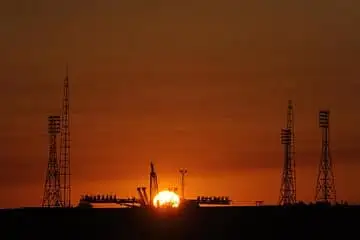
Baikonur Cosmodrome
Kazakhstan · Other
The world's oldest and largest space launch facility, on the Kazakh steppe and leased by Russia.
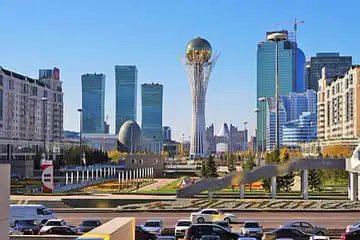
Baiterek Tower
Kazakhstan · Other
An observation tower depicting a golden egg in the tree of life, the symbol of Astana.
Animals in Kazakhstan
Places to discover in Kazakhstan
Questions
What is the capital of Kazakhstan?
The capital of Kazakhstan is Astana.
Which continent is Kazakhstan in?
Kazakhstan is in Europe and Asia.
How big is Kazakhstan?
Kazakhstan covers about 2,724,900 km².
How many people live in Kazakhstan?
About 20.6 million people live in Kazakhstan.
What are the most famous landmarks in Kazakhstan?
Some of the best-known landmarks in Kazakhstan are Baikonur Cosmodrome and Baiterek Tower. My Earth Toy has 2 landmarks from Kazakhstan on its free 3D globe, each with a photo and quick facts.
Which animals can you find in Kazakhstan on My Earth Toy?
On the globe you can find Saiga antelope and Saker falcon in Kazakhstan.
Sources
Updated: 2026-10-30