
Famous landmarks in the Philippines
7 landmarks · 3 animals
The Philippines on My Earth Toy, the free 3D toy globe for kids: 7 landmarks, 3 animals. Here you can see its flag, capital and size, then fly to every place on the globe.
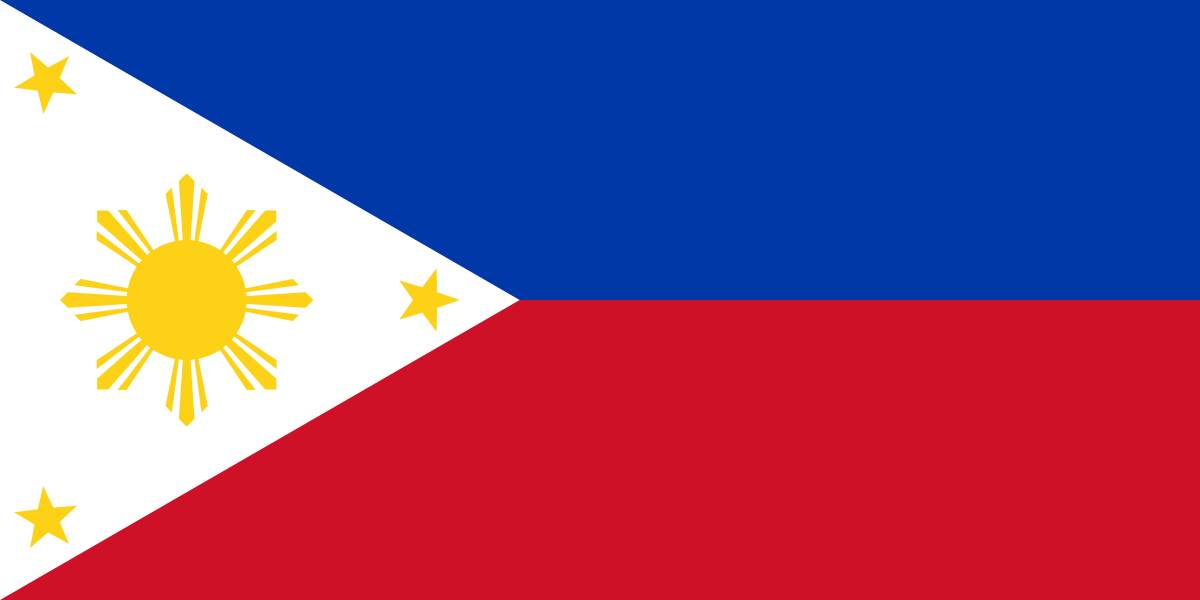
The Philippine flag has a blue stripe over a red stripe, with a white triangle at the pole holding a golden sun with eight rays and three golden stars.
Read about this flag →the Philippines at a glance
- Capital
- Manila
- Continent
- Asia
- Area
- 300,000 km²
- Population
- 115.8 million
The Philippines is an island country in Southeast Asia, in the western Pacific Ocean. It is made up of about 7,600 islands, grouped into three main parts: Luzon in the north, the Visayas in the middle and Mindanao in the south. The capital is Manila, on Luzon, and more than 100 million people live in the country.
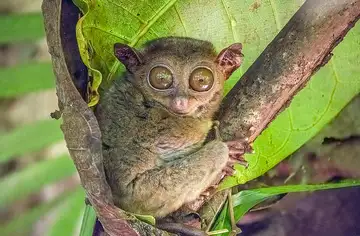
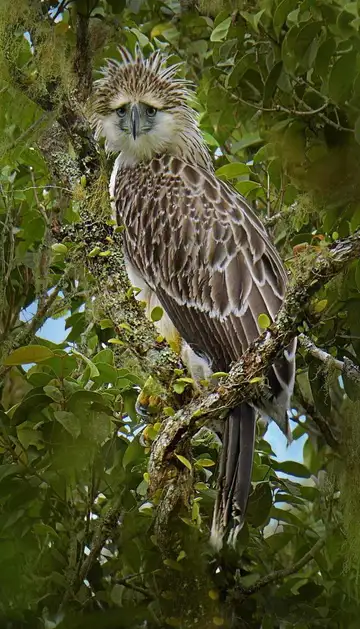
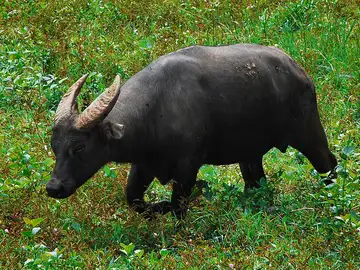
The Philippines is known for white beaches, coral reefs, rice terraces and volcanoes. On the globe you can find the Chocolate Hills, the Banaue Rice Terraces, the cone-shaped Mayon Volcano, the cliffs of El Nido, and Manila's Intramuros, Fort Santiago, cathedral and city hall, along with the tiny tarsier, the Philippine eagle and the tamaraw.
Geography and nature
The islands lie on the Pacific Ring of Fire, so there are many volcanoes and earthquakes. Mayon is famous for its almost perfect cone. Mountains cover the bigger islands, while the seas around them hold some of the richest coral reefs on the planet, such as Tubbataha. Typhoons often strike between June and November. The Philippines has many animals found nowhere else, like the tarsier, whose each eye is about as big as its brain, the huge Philippine eagle, and the tamaraw, a small wild buffalo that lives only on Mindoro.
People, languages and culture
Filipino, which is based on Tagalog, and English are the official languages, but well over 100 languages are spoken across the islands. Most Filipinos are Catholic, making the Philippines one of the largest Christian countries in Asia, and Mindanao has a large Muslim community. Families are close, and big celebrations with food are common. Favourite dishes include adobo, meat stewed in vinegar and soy sauce, and halo-halo, a colourful shaved-ice dessert. Basketball is hugely popular, and brightly decorated jeepneys carry passengers through the cities.
History in a nutshell
People have lived on these islands for tens of thousands of years, trading by sea with China, Borneo and beyond. In 1521 Ferdinand Magellan's expedition arrived, and from 1565 Spain ruled the islands for over 300 years, naming them after King Philip II and building walled Intramuros in Manila. In 1898 the United States took control. Japan occupied the islands during the Second World War. The Philippines became independent on 4 July 1946. José Rizal, a writer executed in 1896, is honoured as a national hero.
Fun facts
- There are more than 1,200 Chocolate Hills on the island of Bohol; their grass turns chocolate-brown in the dry season.
- The Philippine tarsier is one of the smallest primates, small enough to sit on your hand.
- The Philippine eagle is one of the largest eagles in the world and is the national bird.
- The Ifugao rice terraces were carved into the mountains by hand, and some of them are a UNESCO World Heritage Site.
Famous landmarks in the Philippines
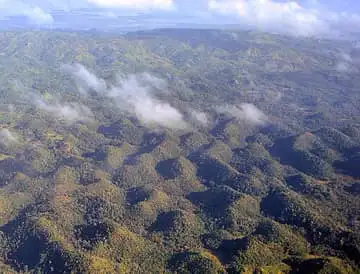
Chocolate Hills
Philippines · Asia
Over 1,200 rounded grassy hills that turn chocolate-brown in the dry season.
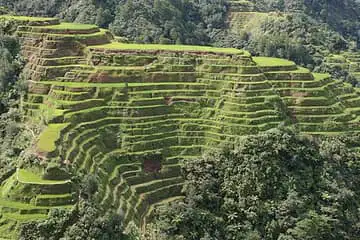
Banaue Rice Terraces
Philippines · Asia
Mountainside rice terraces carved by hand by the Ifugao people some 2,000 years ago.
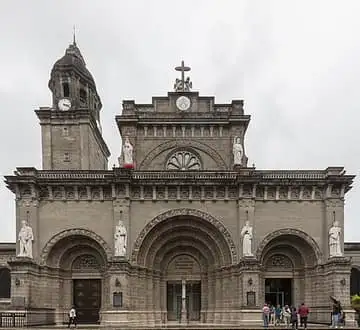
Manila Cathedral
Philippines · Asia
The Minor Basilica of the Immaculate Conception in Intramuros, Manila's cathedral, rebuilt in neo-Romanesque style in 1954–1958 by Fernando Ocampo.
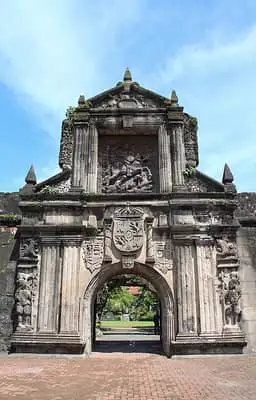
Fort Santiago, Intramuros
Philippines · Asia
A Spanish-era citadel guarding walled Intramuros, where national hero José Rizal was imprisoned.
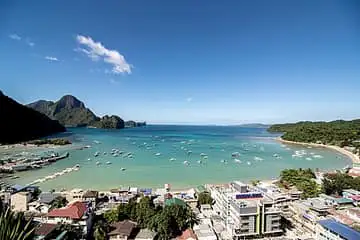
El Nido, Palawan
Philippines · Asia
An island getaway of sheer limestone cliffs, hidden lagoons and white-sand beaches.
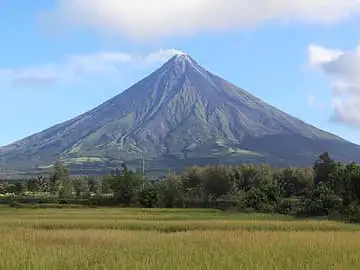
Mayon Volcano
Philippines · Asia
An active volcano celebrated for its almost perfectly symmetrical cone.
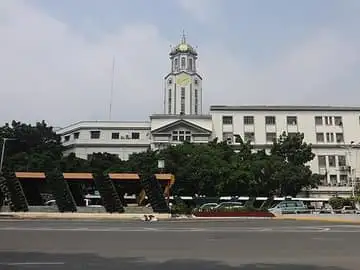
Manila City Hall
Philippines · Asia
Manila's neoclassical city hall by Antonio Toledo, completed in 1941 beside Intramuros: four-storey wings ring inner courts in a coffin-shaped plan under green roofs.
Animals in the Philippines
Questions
What is the capital of the Philippines?
The capital of the Philippines is Manila.
Which continent is the Philippines in?
The Philippines is in Asia.
How big is the Philippines?
The Philippines covers about 300,000 km².
How many people live in the Philippines?
About 115.8 million people live in the Philippines.
What are the most famous landmarks in the Philippines?
Some of the best-known landmarks in the Philippines are Chocolate Hills, Banaue Rice Terraces, Manila Cathedral, Fort Santiago, Intramuros and El Nido, Palawan. My Earth Toy has 7 landmarks from the Philippines on its free 3D globe, each with a photo and quick facts.
Which animals can you find in the Philippines on My Earth Toy?
On the globe you can find Philippine tarsier, Philippine eagle and Tamaraw in the Philippines.
Sources
Updated: 2026-10-30