
Poland: landmarks, animals & facts for kids
2 landmarks · 1 animal · 1 place to discover
Poland on My Earth Toy, the free 3D toy globe for kids: 2 landmarks, 1 animal, 1 place to discover. Here you can see its flag, capital and size, then fly to every place on the globe.
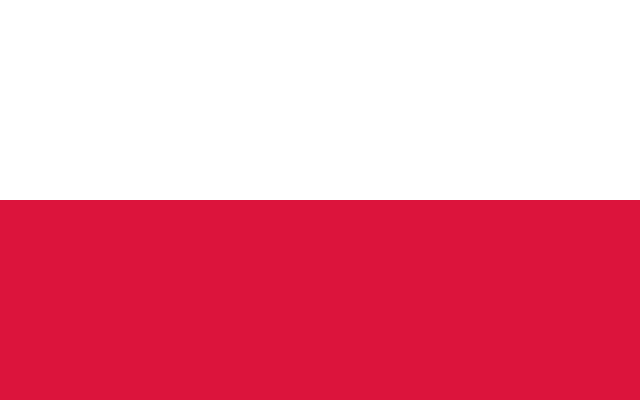
Poland's flag has two sideways stripes of equal size: white on top and red below.
Read about this flag →Poland at a glance
- Capital
- Warsaw
- Continent
- Europe
- Area
- 312,696 km²
- Population
- 38.5 million
Poland is a country in Central Europe with a coastline on the Baltic Sea. It borders Germany, the Czech Republic, Slovakia, Ukraine, Belarus, Lithuania and a part of Russia. Its capital and largest city is Warsaw. Poland is one of the larger countries in the European Union, with about 38 million people.
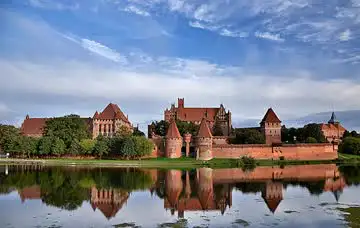
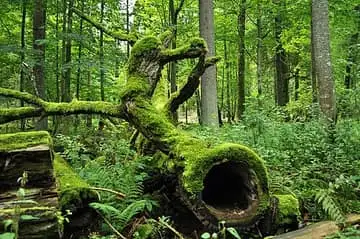
Poland is known for its old castles and rebuilt historic towns, deep forests, lakes and delicious dumplings called pierogi. On the globe you can find Malbork Castle, a gigantic red-brick fortress, and Wawel Castle in Kraków, home of Polish kings, as well as the white stork and the ancient Białowieża Forest.
Geography and nature
Most of Poland is flat or gently rolling; its name is thought to come from an old word for 'field'. In the north are sandy Baltic beaches and the Masurian Lake District, with thousands of lakes. In the south rise the Tatra Mountains, where Rysy, at 2,499 metres, is the country's highest point. The Vistula, Poland's longest river, flows through Kraków and Warsaw. Białowieża Forest, on the border with Belarus, is one of Europe's last old-growth forests and home to wild European bison.
People, languages and culture
Almost everyone speaks Polish, a Slavic language with sounds like 'sz' and 'cz'. Most people are Catholic, and holidays such as Christmas Eve, with its meatless supper, are very important. Popular foods include pierogi, bigos, a hunter's stew, and pączki doughnuts. Poland has given the world the composer Fryderyk Chopin, the astronomer Nicolaus Copernicus and the scientist Marie Skłodowska-Curie, who won two Nobel Prizes. Folk art includes paper cut-outs and painted Easter eggs.
History in a nutshell
Poland became a Christian kingdom in 966. Later, joined with Lithuania, it formed one of the largest states in Europe. At the end of the 1700s its neighbours divided it up, and Poland disappeared from the map for 123 years, returning in 1918. In 1939 the Second World War began with the invasion of Poland, and millions of its people died; Warsaw was almost completely destroyed and later rebuilt. After decades of communist rule, the Solidarity movement helped bring free elections in 1989. Poland joined the European Union in 2004.
Fun facts
- Malbork Castle, built by the Teutonic Knights, is the largest castle in the world measured by land area.
- The Wieliczka Salt Mine near Kraków has chapels, statues and even chandeliers carved out of rock salt.
- A legend says a dragon lived in a cave under Wawel Hill, and today a metal dragon statue there breathes real fire.
- Warsaw's Old Town was rebuilt so carefully after the war that it became a UNESCO World Heritage Site.
Famous landmarks in Poland
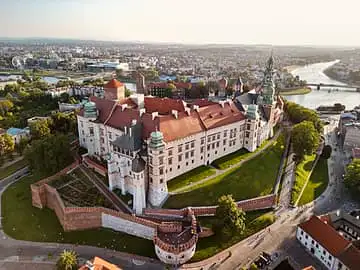
Wawel Castle
Poland · Europe
A royal castle on a hill by the Vistula, residence of Polish kings for centuries.
Animals in Poland
Places to discover in Poland
Questions
What is the capital of Poland?
The capital of Poland is Warsaw.
Which continent is Poland in?
Poland is in Europe.
How big is Poland?
Poland covers about 312,696 km².
How many people live in Poland?
About 38.5 million people live in Poland.
What are the most famous landmarks in Poland?
Some of the best-known landmarks in Poland are Malbork Castle and Wawel Castle. My Earth Toy has 2 landmarks from Poland on its free 3D globe, each with a photo and quick facts.
Which animals can you find in Poland on My Earth Toy?
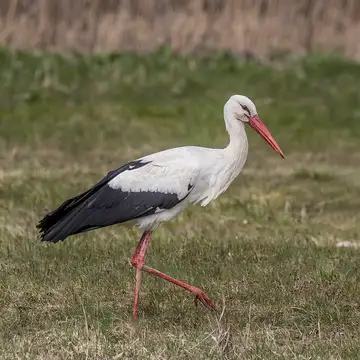
On the globe you can find White stork in Poland.
Sources
Updated: 2026-10-30