
Venezuela: landmarks, animals & facts for kids
1 landmark · 4 animals · 2 places to discover
Venezuela on My Earth Toy, the free 3D toy globe for kids: 1 landmark, 4 animals, 2 places to discover. Here you can see its flag, capital and size, then fly to every place on the globe.
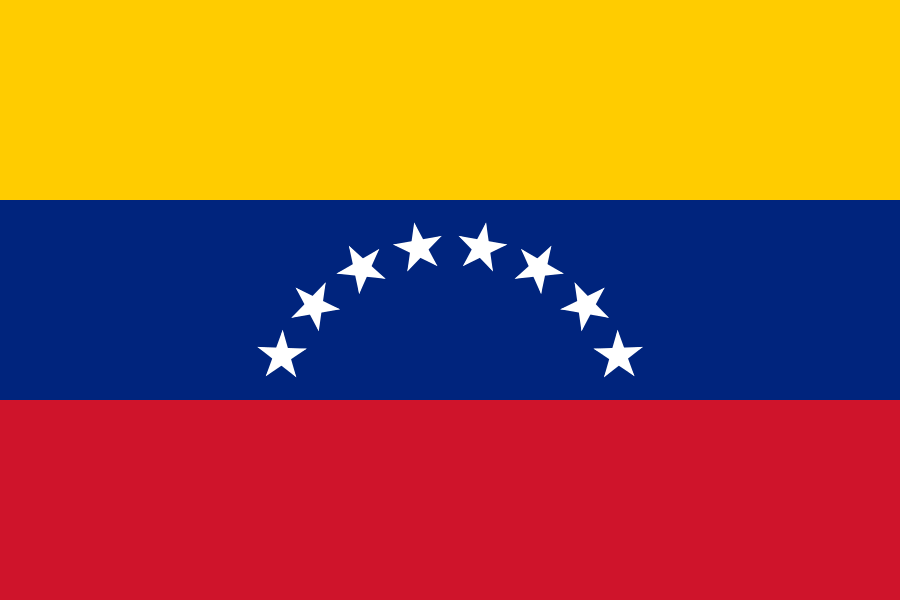
Three equal horizontal stripes of yellow, blue and red, with eight white five-pointed stars in an arch on the blue stripe.
Read about this flag →Venezuela at a glance
- Capital
- Caracas
- Continent
- South America
- Area
- 916,445 km²
- Population
- 28.4 million
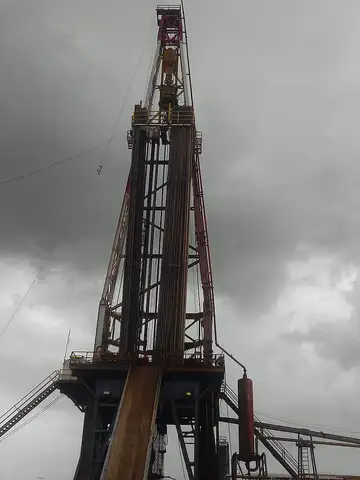
Venezuela is a country on the northern coast of South America, facing the Caribbean Sea. It borders Colombia, Brazil and Guyana. The capital, Caracas, lies in a valley close to the sea, below the green mountains of El Ávila. Venezuela has some of the world's largest oil reserves, found mostly in the Orinoco Belt.
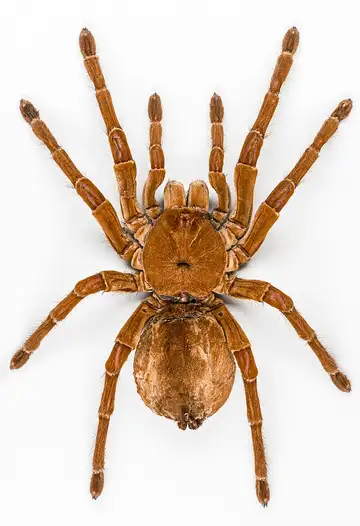
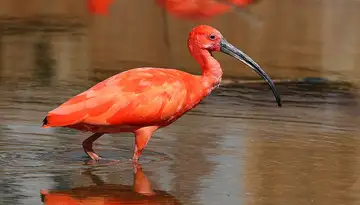
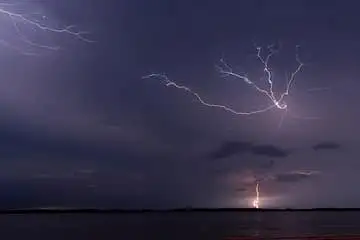
Venezuela is famous for Angel Falls, the highest waterfall in the world, flat-topped mountains called tepuis, huge grassy plains and Caribbean beaches. On the globe you can find Angel Falls, along with capybaras, green anacondas, scarlet ibises and the Goliath birdeater, plus the Catatumbo lightning over Lake Maracaibo.
Geography and nature
Venezuela has four main kinds of land. The Andes reach the north-west, where Pico Bolívar, about 4,978 metres, is the highest peak. The Llanos are wide grassy plains that flood in the rainy season, full of capybaras, caimans, anacondas and wading birds. The Orinoco, one of South America's longest rivers, flows through the country to a great delta. In the south-east, giant tepuis rise from the rainforest, and Angel Falls drops from one of them. In the west lies Lake Maracaibo.
People, languages and culture
Spanish is the official language, and dozens of Indigenous languages are spoken too. Most Venezuelans have mixed European, Indigenous and African roots, and most are Catholic. Arepas, round cornmeal breads stuffed with fillings, are eaten every day, and pabellón criollo, rice with shredded beef, black beans and plantain, is the national dish. At Christmas, families make hallacas, wrapped in banana leaves. Baseball is the most popular sport. Joropo music is played with a harp, a small four-stringed guitar called the cuatro and maracas.
History in a nutshell
Many Indigenous peoples lived here before Europeans arrived in 1498. Spanish explorers saw houses on stilts over the water and named the land Venezuela, meaning 'little Venice'. It became a Spanish colony. Simón Bolívar, born in Caracas in 1783, led wars of independence across northern South America; Venezuela declared independence on 5 July 1811. It was part of Gran Colombia until 1830. In the 1900s, oil was discovered and became the country's most important industry.
Fun facts
- Angel Falls is about 979 metres high, with an unbroken drop of about 807 metres, and is named after Jimmie Angel, a pilot who flew over it in the 1930s.
- Over Lake Maracaibo, the Catatumbo lightning can flash on most nights of the year, sometimes many times a minute.
- The Goliath birdeater, which lives in Venezuela's rainforests, is the heaviest spider in the world.
- Venezuela's official name honours Simón Bolívar: the Bolivarian Republic of Venezuela.
Famous landmarks in Venezuela
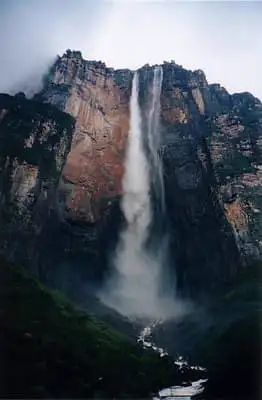
Angel Falls
Venezuela · South America
The world's highest uninterrupted waterfall, plunging 979 m from a tabletop tepui.
Animals in Venezuela
Places to discover in Venezuela
Questions
What is the capital of Venezuela?
The capital of Venezuela is Caracas.
Which continent is Venezuela in?
Venezuela is in South America.
How big is Venezuela?
Venezuela covers about 916,445 km².
How many people live in Venezuela?
About 28.4 million people live in Venezuela.
What are the most famous landmarks in Venezuela?
On My Earth Toy's free 3D globe, the landmark from Venezuela is Angel Falls, with a photo and quick facts.
Which animals can you find in Venezuela on My Earth Toy?
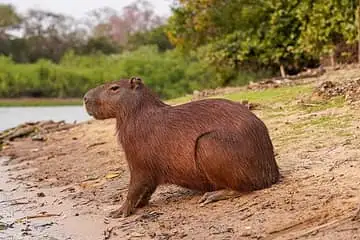
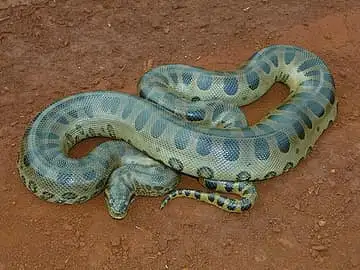
On the globe you can find Capybara, Green anaconda, Goliath birdeater and Scarlet ibis in Venezuela.
Sources
Updated: 2026-10-30