
Brain coral
뇌산호
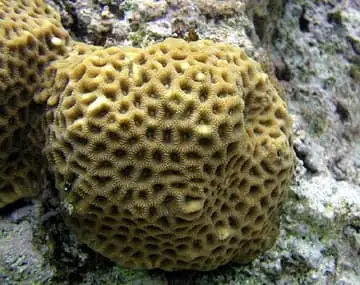
A rounded coral whose surface is covered in winding grooves like a human brain. Thousands of tiny polyps form one colony, and a single colony can live for hundreds of years. It is an important reef-builder.
See it on the 3D globe →At a glance
- Class
- Jellyfish & corals
- Habitat
- coral reefs
Quick answers
Where does the Brain coral live?
It lives in coral reefs of the Atlantic, Pacific and Indian oceans.
Brain coral is the common name for several reef-building corals whose round bodies are covered in winding grooves, like a human brain. They belong to the families Mussidae and Merulinidae and live in shallow, warm coral reefs in all the world's oceans.
Each round head is a colony of thousands of tiny polyps that are genetically identical. The polyps make a hard skeleton of calcium carbonate, which is why brain corals are important reef builders. Colonies can grow 1.8 metres high or more. The reef-building habit of these corals builds ridges and shelters for many fish. Their surface is so hard that it protects them against fish and storms.
How do they eat?
At night the polyps stretch out their tentacles to catch drifting food. By day they use the tentacles to cover the grooves for protection. Brain corals also get food from algae living inside their tissues, which make nutrients from sunlight. One common group, Favia, can sting neighbouring corals with long sweeper tentacles. The polyps are tiny, and each one adds a little to the hard stony skeleton. The grooves, called valleys, are what make the surface look brain-like.
Very old animals
The largest brain corals may live as long as 900 years. Their hard, rounded surface protects them from hungry fish and from hurricanes, whereas fast-growing branching corals are more easily broken by storms. Scientists have even studied brain-coral grooves to design better grip for round wheels. Brain corals are slow growers, so a big one is very old and worth protecting. The reef also gives homes to many sea animals.
Fun facts
- Large brain coral colonies can be hundreds of years old.
- A giant brain coral can live up to about 900 years.
- Its grooved surface inspired research on wheel grip.
- Each head is a colony of many identical polyps.
On the globe
The model shows a rounded coral with brain-like grooves. Look for it on shallow reefs.
More like this


Sources
Updated: 2026-10-14