
Przewalski's horse
프르제발스키말
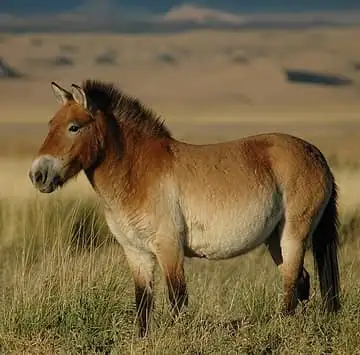
With its short, upright mane, Przewalski's horse is a truly wild horse that vanished from the wild and was brought back to Mongolia's steppes. It has 66 chromosomes against 64 in domestic horses, a separate lineage.
See it on the 3D globe →At a glance
- Class
- Mammals
- Lives in
- Khomiin Tal, Mongolia
- Diet
- Plant eater (herbivore)
- Weight
- about 300 kg
- Conservation status
- Endangered (IUCN EN)
- Habitat
- grasslands, deserts
Quick answers
Where does the Przewalski's horse live?
It lives in grasslands, deserts. On the globe you can find it near Khomiin Tal, Mongolia.
How big is the Przewalski's horse?
It grows to about 300 kg.
What does the Przewalski's horse eat?
Its diet: plant eater (herbivore).
Is the Przewalski's horse endangered?
It is listed as Endangered (IUCN EN).
Przewalski's horse, also called the takhi or Mongolian wild horse, is a rare and endangered wild horse of the steppes of Central Asia. It has a short, upright mane and a dun-coloured coat. It is stocky, about 122 to 142 centimetres tall at the shoulder, and weighs around 300 kilograms.
It is named after the Russian explorer Nikolay Przhevalsky. The horse became extinct in the wild, but since the 1990s horses bred in zoos have been returned to Mongolia, including Hustai National Park, Takhin Tal and Khomiin Tal. Its genes show it is a separate lineage from the domestic horse.
A different kind of horse
Przewalski's horse has 66 chromosomes, while the domestic horse has 64. Scientists think their ancestral lines split between about 160,000 and 38,000 years ago, long before horses were tamed. It was long called the last truly wild horse, unlike the American mustang or Australian brumby, which come from tamed horses. A study of 5,000-year-old horses of the Botai culture raised the question of whether it may descend from tamed horses, so experts still debate this.
Back from extinction
The species was formally described in 1881. Russian explorer Przhevalsky found these horses in the Mongolian steppe in 1879. The last wild ones were seen in the 1960s, so reintroduction began from animals living in zoos. Today herds live in Mongolia and in several other places in Central Asia and Eastern Europe. It is still listed as Endangered, so conservation work continues.
Fun facts
- Przewalski's horse has 66 chromosomes, and a domestic horse has 64.
- In Mongolian it is called takhi.
- It vanished from the wild in the 1960s and was brought back by zoo breeding.
On the globe
The model shows a Przewalski's horse in Khomiin Tal, Mongolia. Look for its short upright mane.
Quiz time
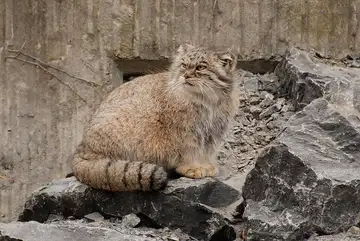
Which is heavier: Przewalski's horse or Pallas's cat?
Show the answer
Przewalski's horse. (300 kg vs 3.5 kg) Pallas's cat →
More like this

Sources
Updated: 2026-10-14