
Baikal seal
바이칼물범
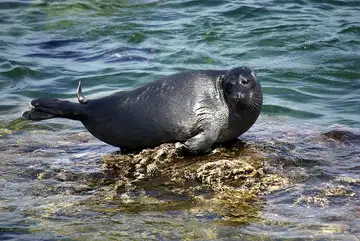
A freshwater seal found only in Lake Baikal, the deepest lake on Earth. It has a round face and big dark eyes, and locals call it the nerpa. It can dive for close to an hour and keeps breathing holes open in the winter ice.
See it on the 3D globe →At a glance
- Class
- Mammals
- Lives in
- Lake Baikal, Siberia, Russia
- Diet
- Fish eater
- Length
- about 1.3 m
- Conservation status
- Least Concern (IUCN LC)
- Habitat
- rivers & lakes
Quick answers
Where does the Baikal seal live?
It lives in rivers & lakes. On the globe you can find it near Lake Baikal, Siberia, Russia.
How big is the Baikal seal?
It grows to about 1.3 m.
What does the Baikal seal eat?
Its diet: fish eater.
Is the Baikal seal endangered?
It is listed as Least Concern (IUCN LC).
The Baikal seal, called the nerpa in Russian, lives only in Lake Baikal in Siberia, the deepest lake on Earth. It is one of the smallest true seals and one of the very few seals that live entirely in fresh water. It has a round face and big dark eyes.
Adults are usually 1.1 to 1.4 metres long and weigh 63 to 70 kg, though the largest on record reached 1.65 m and 130 kg. The back is steely grey and the belly has a yellowish tinge. Its closest relatives are the ringed seal of the Arctic and the Caspian seal, which lives in another lake, the salty Caspian Sea. Population estimates are 80,000 to 100,000, about what the lake can support, and the species is not considered threatened.
How did a seal get into a lake?
The shape of the skull suggests the Baikal seal is closely related to the Caspian seal, and both seem to descend from Arctic ringed seals. Scientists think the ancestors may have swum up rivers, or that Lake Baikal was once joined to the sea through a large body of water in an earlier ice age. The seals are estimated to have lived in Baikal for about two million years.
Diving and hunting
The main food is the golomyanka, an oily fish found only in Lake Baikal. The seals eat more than half of the golomyanka produced each year, about 64,000 tons. Baikal seals can dive to about 400 metres and stay under for more than 40 minutes, and they can hold their breath for up to 70 minutes if frightened. They have two litres more blood than any other seal of their size. Most dives are much shorter, only 2 to 4 minutes.
Life on the ice
For most of the year the seals live alone. In winter, when the lake freezes over, each seal keeps a few breathing holes open and stays near them. Pups are born with white, silky fur that is soon shed for a darker coat like an adult's. Pups weigh 3 to 3.5 kg at birth. More seals gather in the north of the lake, where the longer winter keeps the ice frozen for pupping. A seal's weight changes with the seasons: it is about 38 to 42 percent heavier in autumn than in spring.
Fun facts
- It is the only seal species that lives only in fresh water, in Siberia's Lake Baikal.
- It lives in the world's deepest lake.
- It can stay underwater for more than 40 minutes.
- It weighs 38 to 42 percent more in autumn than in spring.
- The locals call it the nerpa.
On the globe
The model shows a round-faced seal with big dark eyes, as in the card. Look at the face.
Quiz time
Which is longer: Baikal seal or Pallas's cat?
Show the answer
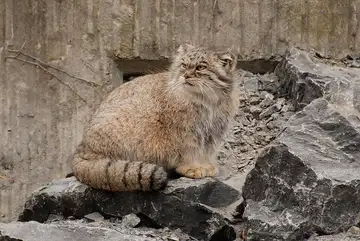
Baikal seal. (1.3 m vs 0.8 m) Pallas's cat →
More like this
_(3635255975).jpg)
Sources
Updated: 2026-10-14