
Yeti (Abominable Snowman)
예티 (설인)
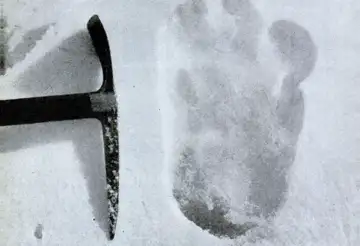
Legend, unconfirmed: the 'abominable snowman' of Himalayan folklore. In 1925 photographer N. A. Tombazi saw an upright figure pulling at dwarf rhododendrons near the Zemu Glacier below Kangchenjunga, but DNA tests of supposed Yeti hair and bones have pointed to bears.
See it on the 3D globe →At a glance
- Country
- India
- Kind
- Legendary creatures
Quick answers
Where is Yeti (Abominable Snowman)?
Yeti (Abominable Snowman) is in India.
The yeti, also called the Abominable Snowman, is a large, hairy, ape-like creature from the folklore of the Himalayas. Nobody has proved it exists. Folklorists think the legend comes from Sherpa stories mixed with real animals like bears being mistaken for it.
The word yeti comes from Tibetan words meaning rocky place and bear. The name Abominable Snowman was invented in 1921 by a newspaper writer in Calcutta, after porters from a Mount Everest expedition told him about tracks in the snow. Climbers and scientists have searched for centuries, but the best explanation is that the stories grew from real animals and imagination.
Where does the story come from?
Different Himalayan peoples have old stories about wild snow creatures. Tibetan lore describes three types, from a small reddish one to a huge black one. In 1921 explorer Charles Howard-Bury found large footprints on a pass at 6,400 metres. He thought they were probably made by a wolf, but his Sherpa guides called it the wild man of the snows. A journalist, Henry Newman, mistranslated the guides' word metoh as abominable.
Is there any evidence?
There are no confirmed bones or bodies. In 1925 photographer N. A. Tombazi said he saw an upright figure pulling at bushes near the Zemu Glacier from several hundred metres away, and later saw footprints. Hair samples have been tested, and one set gathered in the 1950s was found to belong to a Himalayan goral, a goat-like mountain animal. Many supposed yeti proofs are misidentified animals or hoaxes.
Fun facts
- In Himalayan folklore the yeti roams the snowy mountains, but DNA tests on supposed yeti hair and bones have mostly matched bears.
- The word yeti may come from Tibetan words for rocky place and bear.
- Abominable Snowman came from a mistranslation made in 1921.
- Hairs once thought to be a yeti's turned out to come from a Himalayan goral.
On the globe
The model shows the yeti figure in a snowy mountain setting, as folklore pictures it.
Nearby on the globe




Sources
Updated: 2026-10-14