
Flag of South Korea
Taegukgi ("flag of the taegeuk")
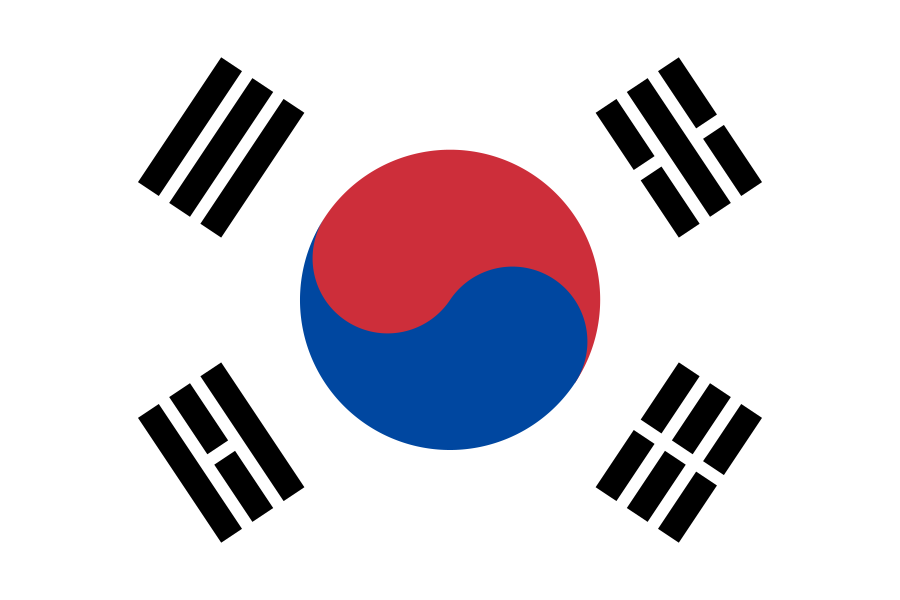
A white flag with a red and blue circle (the taegeuk) in the centre and four black bar patterns (trigrams), one near each corner.
At a glance
- Adopted
- October 15, 1949first proclaimed as Korea's national flag on 27 January 1883; adopted by the Republic of Korea in 1948, with today's exact shape set in 1949 and colours fixed in 1997
- Shape (height : width)
- 2:3
- Capital
- Seoul
- Continent
- Asia
- Colours
- white
- red
- blue
- black
What it means
- White background: peace and purity; white is a traditional colour of the Korean people
- Taegeuk (red and blue circle): yin and yang: red is yang (bright, positive) and blue is yin (dark, negative), always moving in balance
- Four trigrams: geon is heaven, gon is earth, gam is water, and ri is fire
Where it came from
In 1882, while Korea was signing a treaty with the United States, it needed a national flag. Lee Eung-jun is credited with the first design, and Park Yeong-hyo presented a version of it later that year, so he is often called its creator. King Gojong approved it, and it was proclaimed on 27 January 1883.
The symbols come from the I Ching, an ancient Chinese book of philosophy about how the world keeps changing in balance.
History
During Japanese rule (1910-1945), the Korean Provisional Government in exile kept using the flag. After 1945 it was flown in both the north and the south, until North Korea chose a new flag.
The Republic of Korea adopted it in 1948 and set its exact layout on 15 October 1949. The shades of red and blue were fixed by a presidential decree in 1997, and a National Flag Law followed in 2007.
Fun facts
- Each trigram is made of long and broken bars; the four trigrams use 3, 4, 5 and 6 pieces.
- The ball on top of the flagpole is shaped like a bud of the mugunghwa, Korea's national flower.
- Since 2002, after the football World Cup made the flag hugely popular, people have been free to print the flag or its pattern on all kinds of goods, as long as it is treated with respect.
Easy to mix up with
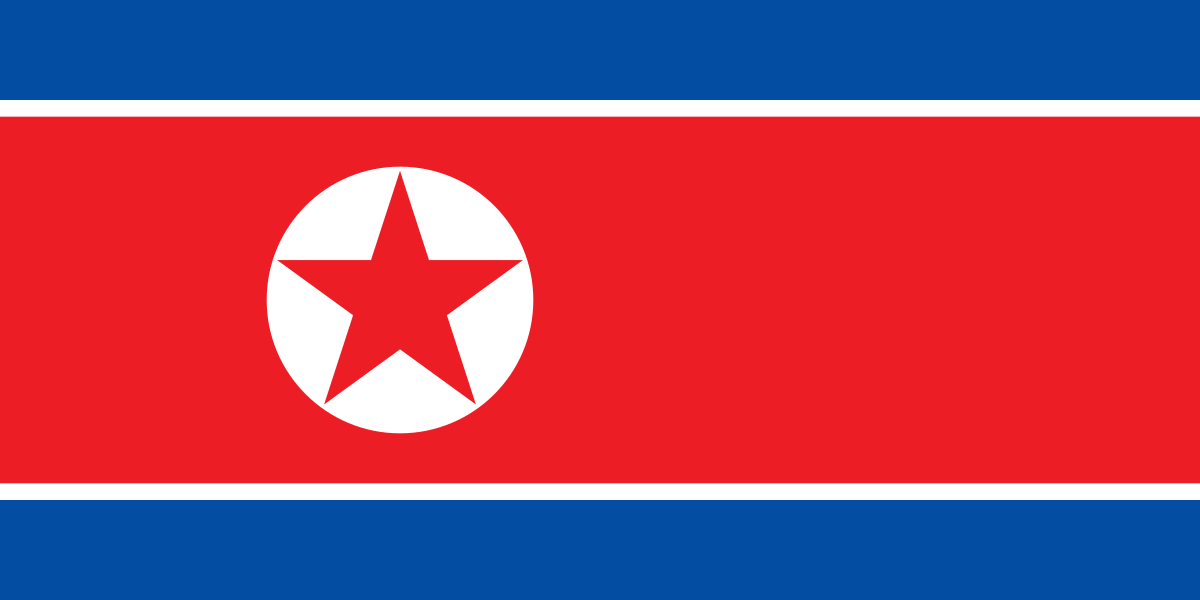 North Korea: North Korea's flag has red, white and blue stripes and a red star instead
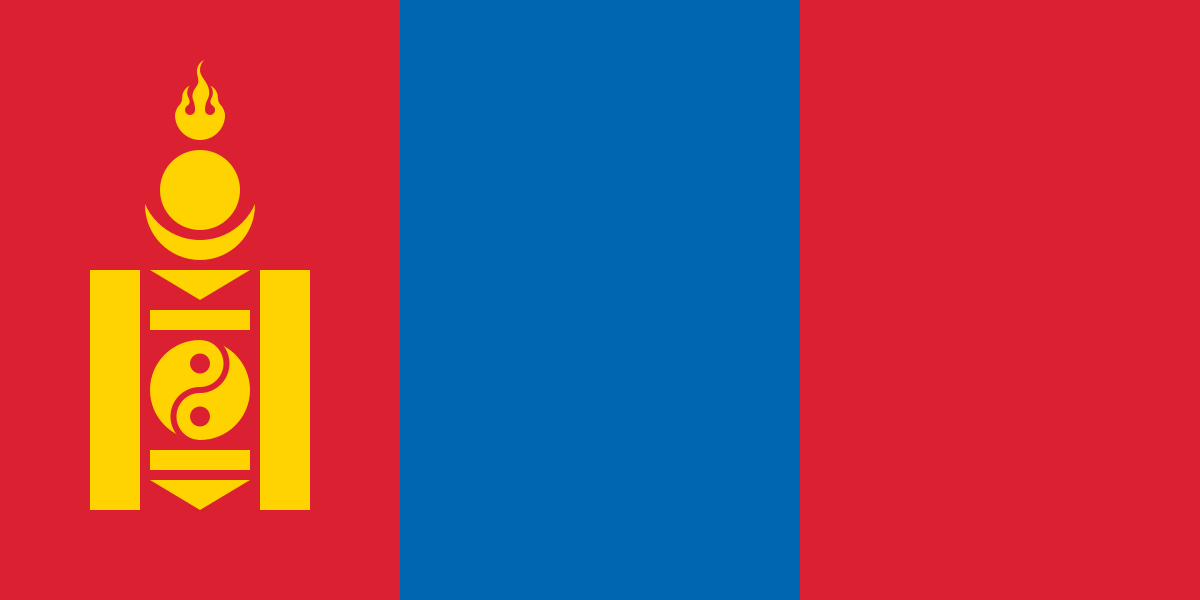 Mongolia: Mongolia also has a yin-yang-like symbol inside its yellow soyombo emblem, on red and blue stripes
Questions
What does the flag of South Korea look like?
A white flag with a red and blue circle (the taegeuk) in the centre and four black bar patterns (trigrams), one near each corner.
What do the colours and symbols on the flag of South Korea mean?
White background: peace and purity; white is a traditional colour of the Korean people; Taegeuk (red and blue circle): yin and yang: red is yang (bright, positive) and blue is yin (dark, negative), always moving in balance; Four trigrams: geon is heaven, gon is earth, gam is water, and ri is fire.
When was the flag of South Korea adopted?
The current flag of South Korea was adopted on October 15, 1949. (first proclaimed as Korea's national flag on 27 January 1883; adopted by the Republic of Korea in 1948, with today's exact shape set in 1949 and colours fixed in 1997)
What colours are on the flag of South Korea?
The flag of South Korea uses white, red, blue and black.
Which flag is easy to mix up with the flag of South Korea?
It is easy to mix up with the flag of North Korea. North Korea's flag has red, white and blue stripes and a red star instead
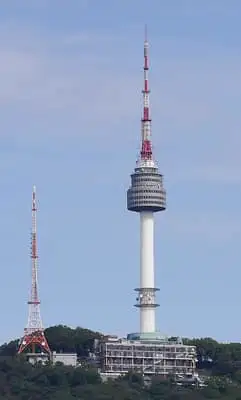
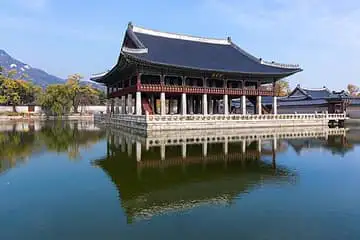
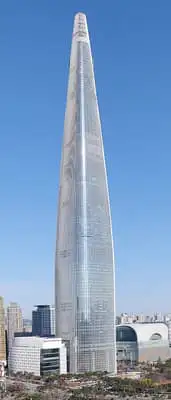
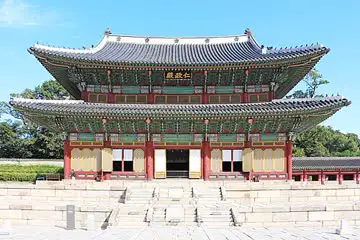
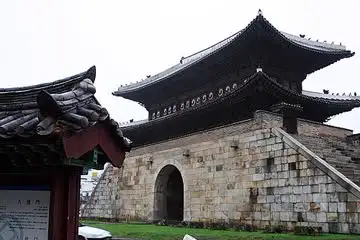
Famous landmarks in South Korea

🎯 Play the flag quiz 🌍 Play the globe
Sources
- en.wikipedia.org
- crwflags.com
- theme.archives.go.kr
- Flag picture: flagcdn.com (Wikimedia Commons)