
Famous landmarks in South Korea
22 landmarks · 3 animals · 1 place to discover
South Korea on My Earth Toy, the free 3D toy globe for kids: 22 landmarks, 3 animals, 1 place to discover. Here you can see its flag, capital and size, then fly to every place on the globe.
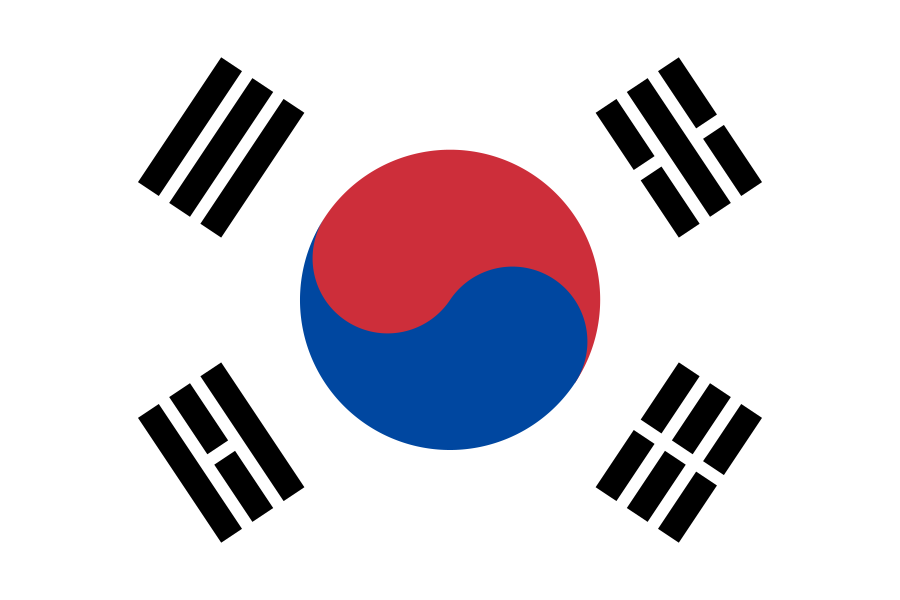
A white flag with a red and blue circle (the taegeuk) in the centre and four black bar patterns (trigrams), one near each corner.
Read about this flag →South Korea at a glance
- Capital
- Seoul
- Continent
- Asia
- Area
- 100,210 km²
- Population
- 51.7 million
South Korea is a country in East Asia that covers the southern half of the Korean Peninsula. Its only land border is with North Korea, across the heavily guarded Demilitarized Zone. The Yellow Sea lies to the west, the Korea Strait to the south and the East Sea (Sea of Japan) to the east. The capital, Seoul, is a giant, busy city on the Han River.
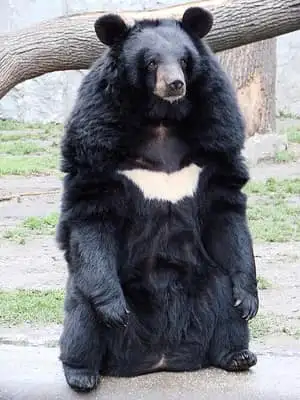
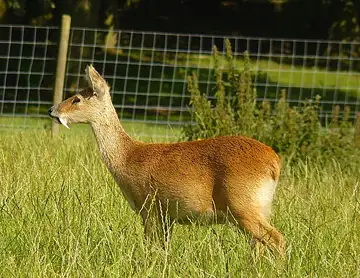
South Korea is known for its royal palaces and temples, high-tech cities, K-pop and delicious food such as kimchi. On the globe you can explore Gyeongbokgung and Changdeokgung palaces, N Seoul Tower, Lotte World Tower, Bulguksa Temple and Seokguram Grotto, Hwaseong Fortress, Jeju's Seongsan Ilchulbong and stone grandfathers, Busan's Gwangan Bridge and more, plus magpies, moon bears and water deer.
Geography and nature
About two-thirds of South Korea is covered by mountains and hills, with the Taebaek Mountains running down the east side. The west and south coasts are jagged, with thousands of small islands and wide tidal mudflats. Jeju, the largest island, is a volcanic island with Hallasan, the country's highest mountain at about 1,950 metres. Korea has four clear seasons: hot, rainy summers and cold, dry winters. Wildlife includes the water deer, which has tusks instead of antlers, and Asiatic black bears brought back to Jirisan mountain.
People, languages and culture
Almost everyone speaks Korean and writes it in Hangul, an alphabet created in the 1440s under King Sejong the Great. Many Koreans follow no religion, while others are Christian or Buddhist, and Confucian values such as respect for elders remain strong. Meals come with rice, soup and many side dishes, especially kimchi; making kimchi together in autumn, called gimjang, is listed by UNESCO. Korean pop music, films and TV dramas are loved around the world, and taekwondo began in Korea.
History in a nutshell
Korea has a history going back thousands of years. Around the 4th to 7th centuries, the Three Kingdoms of Goguryeo, Baekje and Silla ruled the peninsula, and Silla built Bulguksa and Seokguram in the 700s. The Goryeo dynasty gave Korea its English name, and the Joseon dynasty ruled from 1392 to 1910 and built Seoul's palaces. Japan ruled Korea from 1910 to 1945. The peninsula was then divided, and the Korean War of 1950 to 1953 ended in an armistice. South Korea grew rapidly into a wealthy democracy and hosted the 1988 Seoul Olympics.
Fun facts
- Lotte World Tower in Seoul is about 555 metres tall, the tallest building in South Korea.
- Hangul was designed so that the shapes of some letters show how the mouth and tongue move to make each sound.
- Dokdo, a group of small rocky islets in the East Sea, is governed by South Korea and also claimed by Japan.
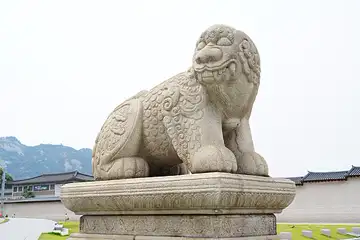
- Jeju's dol hareubang, or 'stone grandfathers', were carved from volcanic rock and were believed to protect villages.
Famous landmarks in South Korea
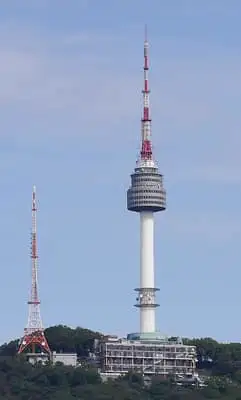
N Seoul Tower
South Korea · Asia
A communications and observation tower atop Namsan mountain, offering sweeping views over Seoul.
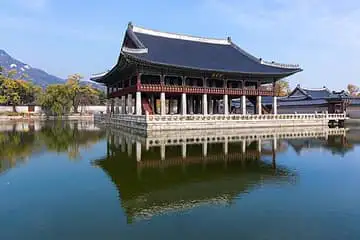
Gyeongbokgung Palace
South Korea · Asia
The main royal palace of the Joseon dynasty, set against the mountains north of Seoul.
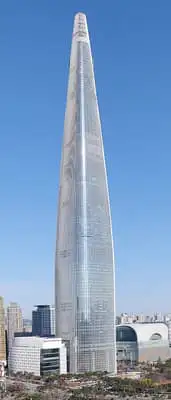
Lotte World Tower
South Korea · Asia
South Korea's tallest building at 555 m and 123 floors, with a sleek tapering, brush-like form.
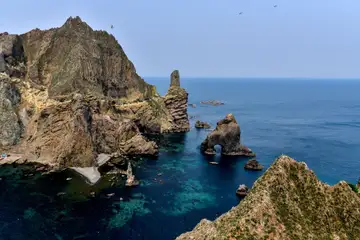
Dokdo
South Korea · Asia
Two volcanic islets in the East Sea, Dongdo and Seodo, ringed by dozens of rocks.
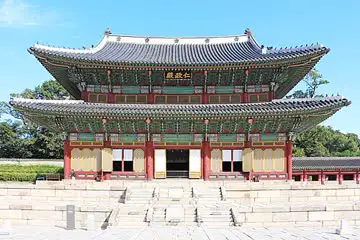
Changdeokgung Palace
South Korea · Asia
Joseon palace laid out to follow the natural terrain, with the Injeongjeon throne hall and the famous Secret Garden.
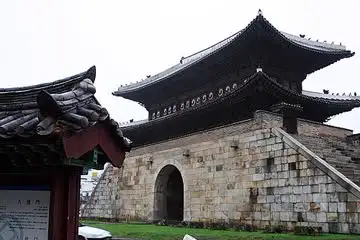
Hwaseong Fortress
South Korea · Asia
King Jeongjo's 5.7 km fortress wall blending Eastern and Western military engineering, entered through the great Janganmun and Paldalmun gates.
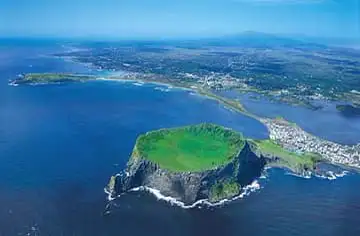
Seongsan Ilchulbong
South Korea · Asia
A tuff cone rising from the sea with a bowl-shaped crater, famous for sunrise views.
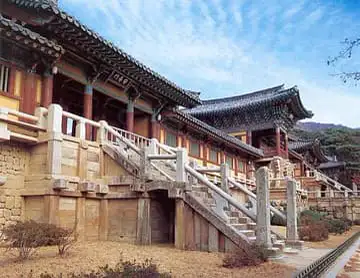
Bulguksa Temple
South Korea · Asia
A masterpiece of Silla Buddhist art, famous for its two stone pagodas, Dabotap and Seokgatap.
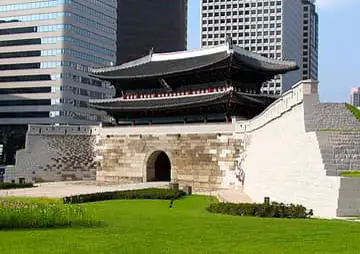
Sungnyemun (Namdaemun) Gate
South Korea · Asia
The historic south gate of Joseon-era Seoul's city wall, once designated National Treasure No.
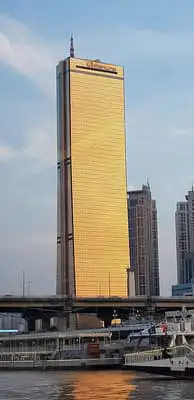
63 Building
South Korea · Asia
A gold-glass tower on the Han River that was the tallest building outside North America when completed in 1985.
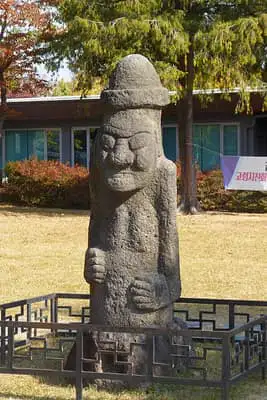
Dol Hareubang (Jeju)
South Korea · Asia
Jeju's "stone grandfather" statues carved from volcanic basalt, once seen as guardians of villages.
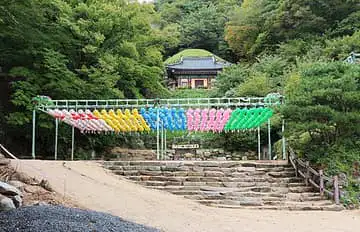
Seokguram Grotto
South Korea · Asia
A granite grotto temple on Tohamsan whose seated Buddha facing the East Sea is a Silla masterpiece.
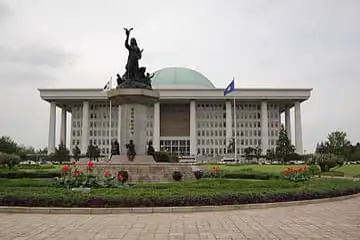
National Assembly Proceeding Hall
South Korea · Asia
Home of South Korea's National Assembly in Yeouido, known for its green dome and 24 columns.
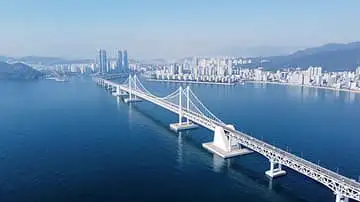
Gwangan Bridge
South Korea · Asia
A double-deck suspension bridge across the bay off Gwangalli Beach, lit up in colour every night.
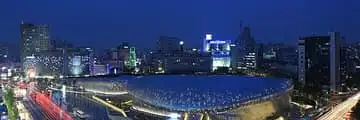
Dongdaemun Design Plaza
South Korea · Asia
Zaha Hadid's cultural hub, opened in 2014: a flowing, cornerless silver landscape about 280 m long, skinned in some 45,000 aluminium panels.
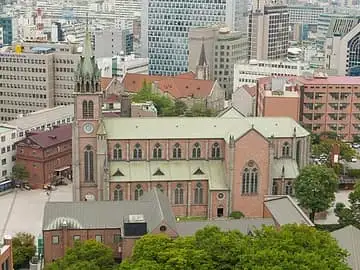
Myeongdong Cathedral
South Korea · Asia
Korea's first Gothic Revival church, completed in 1898 in red and grey brick; its 45 m bell tower and spire rise above the Myeongdong hill.
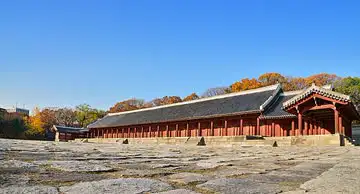
Jongmyo Shrine
South Korea · Asia
Royal ancestral shrine of the Joseon kings; its 101 m Jeongjeon hall is Korea's longest single wooden building.
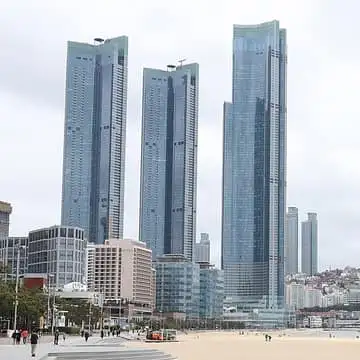
Haeundae LCT The Sharp
South Korea · Asia
A complex on Haeundae Beach: the 101-floor, 411.6 m Landmark Tower, South Korea's second-tallest building, with two residential towers of 85 and 83 floors; tapering blue glass ends in a ridged crown.
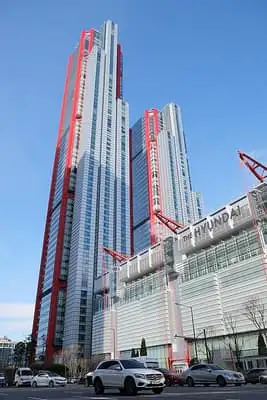
Parc.1
South Korea · Asia
Richard Rogers' Yeouido complex: two office towers of 333 m and 256 m whose cut-back corners carry bright red steel mega-frames, with The Hyundai Seoul department store between them.
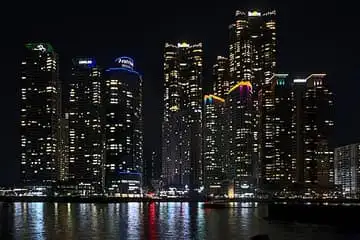
Haeundae Doosan We've the Zenith
South Korea · Asia
Three residential towers of 70, 75 and 80 floors (up to 300 m) in Haeundae's Marine City, completed in 2011; curved, petal-like walls inspired by the beach waves, crowned with stepped tops.
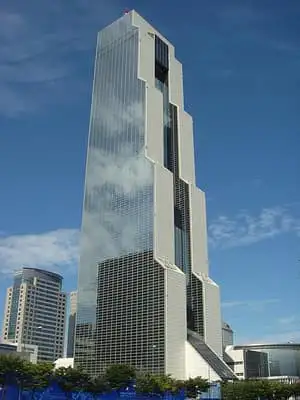
Trade Tower
South Korea · Asia
The 228 m, 55-storey Korea World Trade Center tower beside COEX, designed by Nikken Sekkei: two mirror-image square shafts locked together on a diagonal, their corners cut into saw-tooth steps.
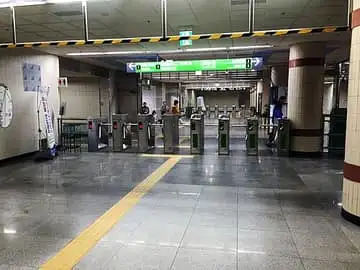
Busan International Finance Center (BIFC)
South Korea · Asia
A 63-floor, 289 m glass-and-metal tower in Busan's Munhyeon financial district, completed in 2014 and designed by HAUD; its body steps inward to a sloping crown with an antenna.
Animals in South Korea
Places to discover in South Korea
Questions
What is the capital of South Korea?
The capital of South Korea is Seoul.
Which continent is South Korea in?
South Korea is in Asia.
How big is South Korea?
South Korea covers about 100,210 km².
How many people live in South Korea?
About 51.7 million people live in South Korea.
What are the most famous landmarks in South Korea?
Some of the best-known landmarks in South Korea are N Seoul Tower, Gyeongbokgung Palace, Lotte World Tower, Dokdo and Changdeokgung Palace. My Earth Toy has 22 landmarks from South Korea on its free 3D globe, each with a photo and quick facts.
Which animals can you find in South Korea on My Earth Toy?
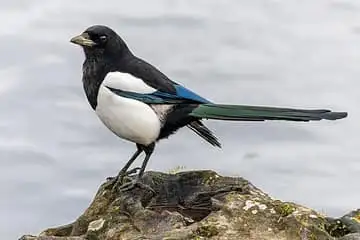
On the globe you can find Eurasian magpie, Asiatic black bear (Moon bear) and Water deer in South Korea.
Sources
Updated: 2026-10-30