
Atlantic bluefin tuna
참다랑어(참치) 떼
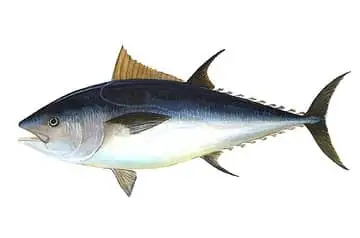
A giant tuna that crosses the ocean at 70 km/h, migrating in schools between the Atlantic and the Mediterranean. It can top 3 m and 250 kg, and keeps its body warmer than the cold water around it.
See it on the 3D globe →At a glance
- Class
- Fish
- Lives in
- North Atlantic and the Mediterranean
- Diet
- Fish eater
- Weight
- about 240 kg
- Length
- about 2 m
- Top speed
- about 70 km/h
- Lifespan
- up to about 40 years
- Conservation status
- Least Concern (IUCN LC)
- Habitat
- open ocean
Quick answers
Where does the Atlantic bluefin tuna live?
It lives in the open ocean of the Atlantic Ocean. On the globe you can find it near North Atlantic and the Mediterranean.
How big is the Atlantic bluefin tuna?
It grows to about 2 m and 240 kg.
What does the Atlantic bluefin tuna eat?
Its diet: fish eater.
How fast is the Atlantic bluefin tuna?
It can reach about 70 km/h.
How long does the Atlantic bluefin tuna live?
It can live up to about 40 years.
Is the Atlantic bluefin tuna endangered?
It is listed as Least Concern (IUCN LC).
The Atlantic bluefin tuna is the largest kind of tuna. It lives in the Atlantic Ocean and the Mediterranean Sea, and it is a powerful, streamlined swimmer. Animals as big as 680 kilograms have been recorded, although most are much smaller.
Bluefins travel in schools and make huge migrations. A tracking study found that they can cross the whole Atlantic in 40 to 60 days. Their speed, size and strength have made them a favourite of anglers, writers and scientists, and also a very valuable catch for fishing fleets. Its flesh is highly prized, so the species has been at the centre of a very valuable fishing industry for a long time.
Where does it live and what does it eat?
Bluefins are found in the temperate and subtropical Atlantic and in the Mediterranean, and they can dive to about 1,000 metres. They are fast hunters of fish and other prey. The species disappeared from the Black Sea because of overfishing, although it has recently been seen moving into waters near Norway and Ireland.
Records show some individuals reaching 680 kilograms, and the species is a fast, strong swimmer; our card gives a top speed of about 70 km/h. Bluefin cross the Atlantic by following temperature and food, and the card notes they keep their bodies warmer than the cold water around them.
Is it in danger?
Because bluefin is so prized for sushi and sashimi, it has been heavily fished. In 2009 the international commission that watches Atlantic tuna reported that stocks had fallen by 72 percent in the eastern Atlantic and 82 percent in the western Atlantic over about 40 years.
Fishing limits were discussed internationally after that report, and today the IUCN lists the species as Least Concern, but scientists keep watching the numbers. The international fight over how much bluefin can be caught shows how hard it is to protect a fish that swims across many countries' waters.
Fun facts
- Bluefin tuna keep their bodies warmer than the surrounding water, which is rare among fish.
- Bluefin tuna can cross the whole Atlantic Ocean in 40 to 60 days.
- It can dive about 1,000 metres deep.
- It is the biggest tuna, with records up to 680 kilograms.
On the globe
The model shows a big, torpedo-shaped bluefin tuna swimming through open water.
Quiz time
Which is heavier: Atlantic bluefin tuna or Great white shark?
Show the answer
Great white shark. (240 kg vs 770 kg) Great white shark →
More like this

Sources
Updated: 2026-10-14