
Great white shark
백상아리
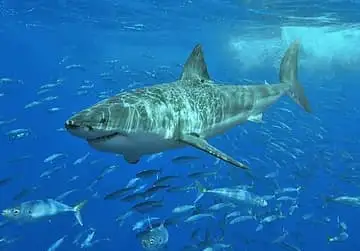
The largest predatory fish, which off South Africa launches clear out of the water after seals. It usually grows 4 to 5 m long, and its teeth are replaced again and again, so it gets through hundreds in a lifetime.
See it on the 3D globe →At a glance
- Class
- Fish
- Lives in
- Southern Ocean off South Africa
- Diet
- Meat eater (carnivore)
- Weight
- about 770 kg
- Length
- about 4.2 m
- Top speed
- about 56 km/h
- Lifespan
- up to about 70 years
- Conservation status
- Vulnerable (IUCN VU)
- Habitat
- coasts, open ocean
Quick answers
Where does the Great white shark live?
It lives in coasts, open ocean of the Pacific, Atlantic and Indian oceans. On the globe you can find it near Southern Ocean off South Africa.
How big is the Great white shark?
It grows to about 4.2 m and 770 kg.
What does the Great white shark eat?
Its diet: meat eater (carnivore).
How fast is the Great white shark?
It can reach about 56 km/h.
How long does the Great white shark live?
It can live up to about 70 years.
Is the Great white shark endangered?
It is listed as Vulnerable (IUCN VU).
The great white shark is the largest predatory fish in the sea. Most are about 4 to 5 metres long. It has a gray back, a white belly and about 300 triangular, saw-edged teeth that are replaced again and again. Its heavy, oily liver can weigh more than a quarter of its body, which helps it float.
Great whites live in warm and cool seas around the world, near coasts and far out in the open ocean. They are most common off North America, southern Africa and Oceania. They eat seals, dolphins, fish and squid, and the IUCN lists the species as Vulnerable.
Built to hunt
The great white is partly warm-blooded. That helps it stay active in cold water. Off South Africa, hunting sharks sometimes launch right out of the water as they chase seals.
Young sharks stay in shallower water and eat smaller prey. Adults travel long distances between the coast and the open sea, sometimes even crossing from one continent to another. It also scavenges whale carcasses when it finds them.
Is it a man-eater?
The 1974 novel Jaws and its film made people fear great whites. In reality, white sharks do not normally hunt people. Most bites seem to come from curiosity or mistaken identity.
The sharks themselves face greater danger from us than we do from them, because of fishing. Visitors can watch them safely from boats or from inside cages in places where they gather.
Fun facts
- Off South Africa, great whites sometimes leap completely out of the water while chasing seals.
- Its teeth are replaced over and over, so a shark uses hundreds in a lifetime.
- Sharks off South Africa sometimes leap completely out of the water.
- Killer whales sometimes hunt great white sharks.
On the globe
The globe places the great white shark in the sea south of South Africa. Look for the pointed snout and the big dorsal fin.
Quiz time
Which is heavier: Great white shark or Sand tiger shark?
Show the answer
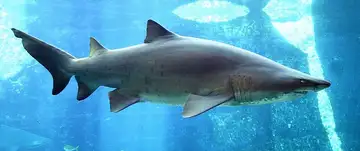
Great white shark. (770 kg vs 120 kg) Sand tiger shark →
More like this

Sources
Updated: 2026-10-14