
Galápagos giant tortoise
갈라파고스땅거북
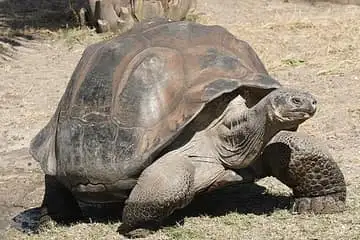
The largest living tortoise, sometimes over 400 kg, and able to live for more than 100 years. It plods at about 0.3 km/h, and shell shapes differ from island to island, which famously helped inspire Darwin.
See it on the 3D globe →At a glance
- Class
- Reptiles
- Lives in
- Isabela Island, Galápagos, Ecuador
- Diet
- Plant eater (herbivore)
- Weight
- about 200 kg
- Length
- about 1.2 m
- Top speed
- about 0.3 km/h
- Habitat
- grasslands, forests
Quick answers
Where does the Galápagos giant tortoise live?
It lives in grasslands, forests. On the globe you can find it near Isabela Island, Galápagos, Ecuador.
How big is the Galápagos giant tortoise?
It grows to about 1.2 m and 200 kg.
What does the Galápagos giant tortoise eat?
Its diet: plant eater (herbivore).
How fast is the Galápagos giant tortoise?
It can reach about 0.3 km/h.
The Galápagos tortoise is the largest living tortoise. It can weigh up to 417 kilograms and is also the largest cold-blooded land animal alive. It lives only on seven islands of the Galápagos, which belong to Ecuador, and is named after the Spanish word for tortoise, galápago.
In the wild it can live more than 100 years, making it one of the longest-lived vertebrates. A captive tortoise named Harriet lived at least 175 years. Today there are 12 living subspecies. Their numbers once dropped from more than 250,000 in the 1500s to about 15,000 in the 1970s, but conservation has helped them recover to more than 19,000 by the start of the 2000s.
Why do their shells differ?
Shell shape depends on the island. On wet islands with plenty of low plants, tortoises are bigger and have domed shells and short necks. On dry islands where food grows higher, they are smaller, with 'saddleback' shells that arch up at the front and long necks for reaching tall plants. Charles Darwin noticed these differences on the Beagle voyage in 1835, and they helped him build his theory of evolution.
Why did their numbers fall?
Sailors and settlers hunted the tortoises for meat and oil, farmers cleared land, and people brought animals such as rats, goats and pigs that harm the tortoises or the plants they need. Three populations have died out in historic times. The last known Pinta Island tortoise, nicknamed Lonesome George, died in June 2012. Since the 1900s, conservation groups have raised thousands of young tortoises and released them on their home islands. All surviving subspecies are still treated as threatened.
Fun facts
- Differences between tortoises on different islands helped inspire Charles Darwin's ideas about evolution.
- A captive tortoise named Harriet lived at least 175 years.
- Island-to-island differences in their shells helped inspire Darwin.
- Lonesome George, the last of his subspecies, died in 2012.
On the globe
The toy model sits on Isabela Island in the Galápagos. Look for the big domed shell.
Quiz time
Which is heavier: Galápagos giant tortoise or Green iguana?
Show the answer
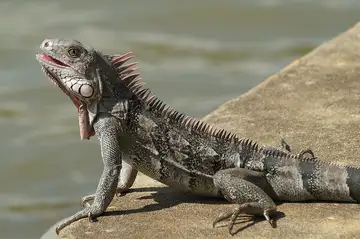
Galápagos giant tortoise. (200 kg vs 4 kg) Green iguana →
More like this

Sources
Updated: 2026-10-14