
Sea otter
해달
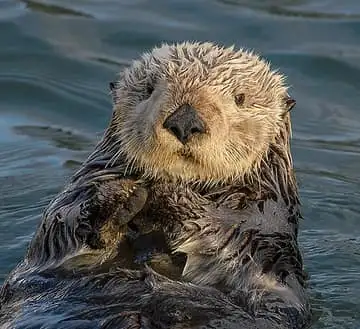
One of the few tool-using mammals, cracking shellfish open on a rock balanced on its belly. It has no thick blubber, relying on the densest fur of any animal, and sleeping otters sometimes hold hands so they do not drift apart.
See it on the 3D globe →At a glance
- Class
- Mammals
- Lives in
- North Pacific between the Aleutians and Kamchatka
- Diet
- Meat eater (carnivore)
- Weight
- about 28 kg
- Length
- about 1.3 m
- Top speed
- about 9 km/h
- Lifespan
- up to about 20 years
- Conservation status
- Endangered (IUCN EN)
- Habitat
- coasts
Quick answers
Where does the Sea otter live?
It lives in coasts of the Pacific Ocean. On the globe you can find it near North Pacific between the Aleutians and Kamchatka.
How big is the Sea otter?
It grows to about 1.3 m and 28 kg.
What does the Sea otter eat?
Its diet: meat eater (carnivore).
How fast is the Sea otter?
It can reach about 9 km/h.
How long does the Sea otter live?
It can live up to about 20 years.
Is the Sea otter endangered?
It is listed as Endangered (IUCN EN).
The sea otter is a marine mammal that lives along the coasts of the North Pacific Ocean, from Russia across Alaska and down to California and Mexico. It is the heaviest member of the weasel family, yet one of the smallest marine mammals: adult males usually weigh 22 to 45 kilograms and are 1.2 to 1.5 metres long.
Unlike seals and whales, the sea otter has no thick layer of blubber, the fat that keeps many sea animals warm. Instead it relies on the densest fur of any animal. It is famous for floating on its back and using rocks as tools to crack open shellfish. Sea otters also matter a lot to their home: by eating sea urchins, they stop the urchins from destroying underwater kelp forests. The IUCN lists the species as Endangered.
What it eats
Sea otters dive to the sea floor to collect sea urchins, clams, mussels, abalone, crabs and other creatures. Staying warm in cold water burns a lot of energy, so an otter must eat about a quarter to more than a third of its own body weight every day. It carries food, and sometimes a favourite rock, in a loose pouch of skin under each front leg. Floating on its back, it lays the rock on its chest and bangs shellfish against it until they crack open.
Amazing fur
A sea otter's fur has up to 150,000 hairs in every square centimetre, an area about the size of a fingertip. The thick underfur traps a layer of air that keeps cold water away from the skin. That only works if the fur stays clean, so otters spend a lot of time grooming with their paws and teeth to keep it fluffy and waterproof.
Is it endangered?
That wonderful fur nearly wiped sea otters out. Between 1741 and 1911, hunters killed so many for their pelts that only about 1,000 to 2,000 were left in the whole world. Laws now protect them, and in many places their numbers grew back, but some groups have declined again, and the IUCN lists the species as Endangered. Protecting otters also helps kelp forests, because without otters, sea urchins can eat the kelp away.
Fun facts
- Sea otters often wrap themselves in kelp or hold paws while sleeping so they don't drift apart.
- Resting sea otters gather in groups called rafts, and the biggest raft ever seen had more than 2,000 otters.
- Sea otters are one of the few mammals that use tools.
- Sleeping sea otters are sometimes seen holding paws.
- A sea otter keeps a favourite rock in a skin pouch under its front leg.
- In the wild, sea otters can live up to 23 years.
On the globe
The model shows a sea otter floating on its back in the North Pacific between the Aleutian Islands and Kamchatka. Look for it resting on the surface of the sea.
Quiz time
Which is heavier: Sea otter or Dall's porpoise?
Show the answer
Dall's porpoise. (28 kg vs 160 kg) Dall's porpoise →
More like this
_(25169790524)_crop.jpg)
Sources
Updated: 2026-10-13