
Spiny lobster
닭새우(가시바닷가재)
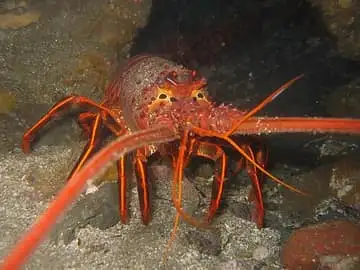
A lobster with no big claws but long, spiny antennae. In the Caribbean, dozens line up head to tail and march together to deeper water in autumn, and it can scrape its antennae base to make a violin-like rasping sound.
See it on the 3D globe →At a glance
- Class
- Crustaceans
- Diet
- Eats both plants and meat (omnivore)
- Habitat
- coral reefs, coasts
Quick answers
Where does the Spiny lobster live?
It lives in coral reefs, coasts of the Atlantic, Pacific and Indian oceans.
What does the Spiny lobster eat?
Its diet: eats both plants and meat (omnivore).
Spiny lobsters are sea creatures that look like lobsters but have no big pinching claws. They belong to a family called Palinuridae with about 60 living species, and they are found in warm and temperate seas around the world. Instead of claws they carry very long, thick, spiny antennae that they use to feel their way and to defend themselves.
They are not close relatives of true lobsters, even though they look alike at first glance. Adults range from a few centimetres to about 30 to 40 centimetres long, and a few can be larger. In some countries, such as Australia, New Zealand and South Africa, they are also called crayfish. They are an important seafood and are often caught in traps.
How to tell them from true lobsters
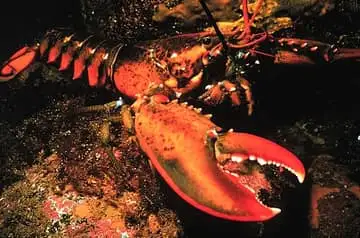
True lobsters have a big pair of claws and small antennae. A spiny lobster is the opposite: it has long spiny antennae and no claws on the first four pairs of legs. Females of many species have a small claw on the last pair. Their young also go through a strange, flat, see-through larva stage called a phyllosoma before they settle down.
Marching and squeaking
In the Caribbean, spiny lobsters are known to line up head to tail and walk in a long single file toward deeper water in autumn. They also make a rasping, violin-like sound by scraping the base of their antennae against their shell, which may help scare off predators. Many hide in rocky crevices during the day and come out at night.
Fun facts
- Spiny lobsters have no big claws and make a rasping sound by rubbing the base of their antennae.
- The family name comes from the small Italian port of Palinuro, where a European spiny lobster was fished in Roman times.
- They have no big claws, but their antennae are long and spiky.
- Caribbean spiny lobsters can march in long lines across the sea floor.
- They make a rasping sound by rubbing the base of their antennae.
On the globe
On the toy globe the spiny lobster appears in warm reef waters. Look for the long antennae and the missing big claws.
More like this

Sources
Updated: 2026-10-14