
Famous landmarks in Antarctica
7 landmarks · 1 animal · 5 places to discover
Antarctica on My Earth Toy, the free 3D toy globe for kids: 7 landmarks, 1 animal, 5 places to discover. Here you can see its flag, capital and size, then fly to every place on the globe.
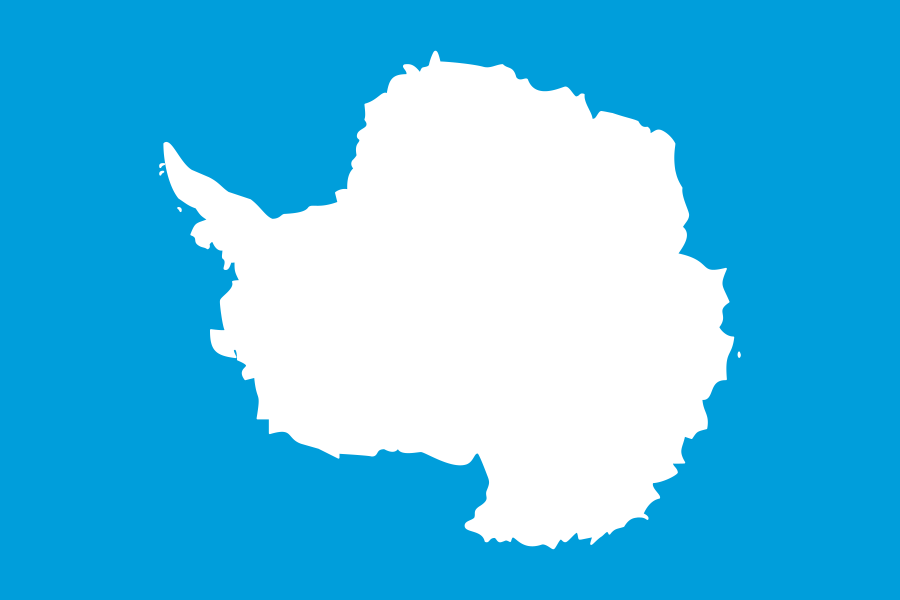
Antarctica has no official flag. The best-known design, shown here, is a white map of the continent on a plain blue background.
Read about this flag →Antarctica at a glance
- Continent
- Antarctica
- Area
- 14,200,000 km²
Antarctica is the icy continent around the South Pole, the coldest, windiest and driest place on Earth. It is not a country: no nation owns it outright, and it has no permanent population. About 14 million square kilometres in size, it is almost completely covered by a thick sheet of ice. Scientists from many countries live at research stations there for months at a time.
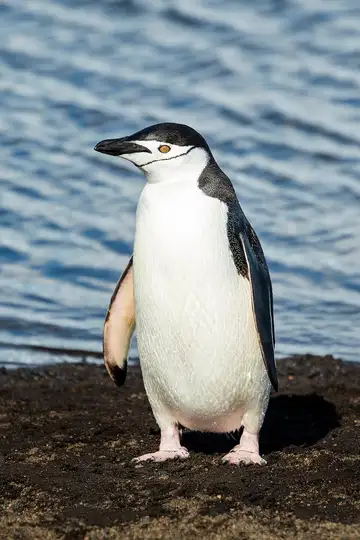
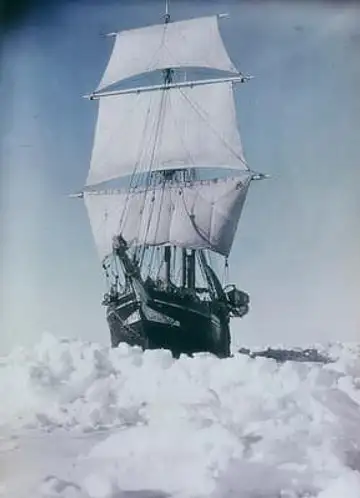
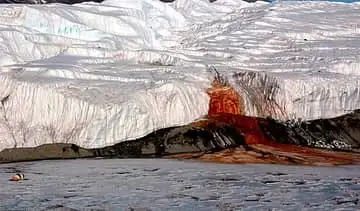
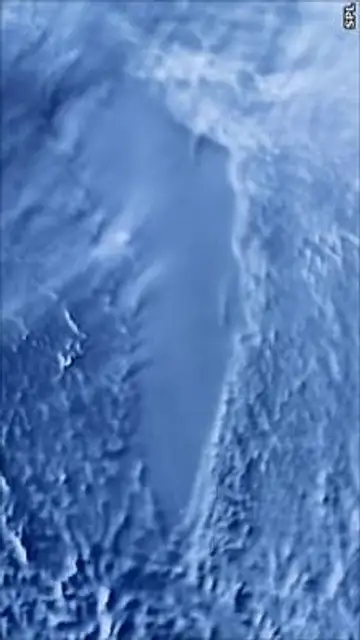
On My Earth Toy you can explore several of those stations, including McMurdo Station, the Amundsen–Scott South Pole Station, Russia's Vostok Station, Britain's Halley VI on its ski legs and Concordia. Look for the chinstrap penguin too, and for discoveries such as the wreck of Shackleton's ship Endurance, Blood Falls and Lake Vostok hidden under the ice.
Ice, land and wildlife
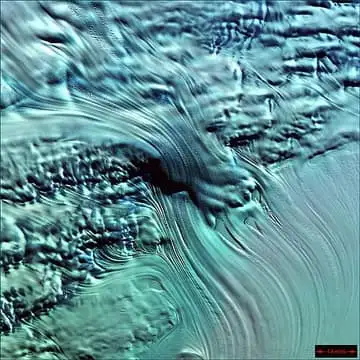
Antarctica's ice sheet is on average close to two kilometres thick and holds most of the fresh water on Earth. Underneath are mountains, valleys and even lakes of liquid water, such as Lake Vostok. The coldest temperature ever measured on the ground, minus 89.2 °C, was recorded at Vostok Station in 1983. Almost nothing grows inland, but the seas around the continent are full of krill, which feed penguins, seals and whales.
Who lives there
Nobody is born and raised in Antarctica as a home. Instead, scientists and support staff arrive by ship and plane. In summer a few thousand people live at the stations; in the dark winter far fewer stay. They study climate, ice, space, wildlife and the ozone layer, which scientists at Halley first found was thinning over Antarctica. Stations bring in their food and fuel, and visitors must follow strict rules to protect the environment.
History in a nutshell
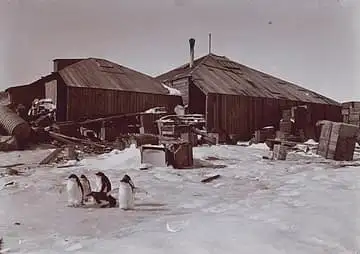
Explorers first sighted Antarctica in 1820. In the early 1900s came the race to the South Pole: Roald Amundsen's Norwegian team reached it first in December 1911, and Robert Falcon Scott's British team arrived weeks later. Ernest Shackleton's ship Endurance was crushed by ice in 1915, and its wreck was found on the seabed in 2022. The Antarctic Treaty, signed in 1959, keeps the continent for peace and science.
Fun facts
- Antarctica is technically a desert, because very little snow or rain falls inland each year.
- Some parts of the ice sheet are more than 4 kilometres thick.
- Under the Antarctic Treaty, military activity and mining are not allowed on the continent.
- At the South Pole, the Sun stays up for about six months and then stays down for about six months.
Famous landmarks in Antarctica
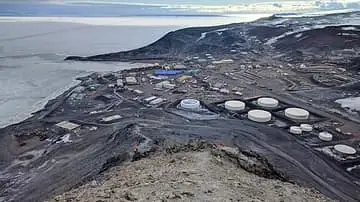
McMurdo Station
Antarctica · Antarctica
Antarctica’s largest base, a US research and logistics hub housing over 1,000 people in summer; Observation Hill behind it bears a cross for Scott’s party.
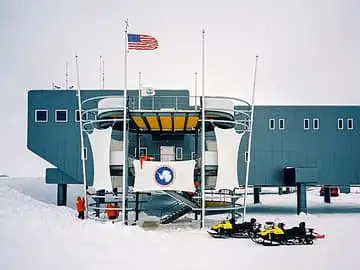
Amundsen–Scott South Pole Station
Antarctica · Antarctica
The US station at the geographic South Pole, raised on stilts so drifting snow passes beneath; beside it stands the ceremonial pole with its mirror ball.
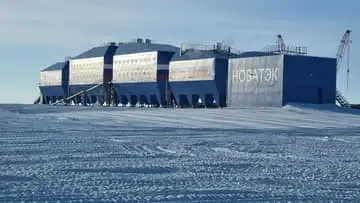
Vostok Station
Antarctica · Antarctica
The Russian station where Earth’s lowest temperature, −89.2 °C, was recorded in 1983; its drill reached the vast subglacial Lake Vostok.
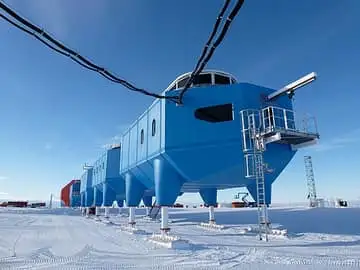
Halley VI Research Station
Antarctica · Antarctica
A British station of eight modules on hydraulic ski-legs that can be towed as the ice shelf moves; the ozone hole was first detected here.
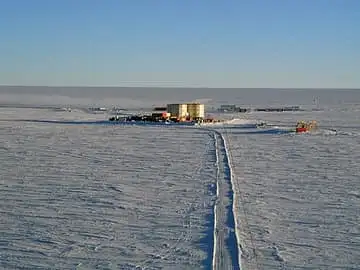
Concordia Station
Antarctica · Antarctica
A French–Italian station 3,233 m up on the Antarctic plateau: two drum-shaped buildings joined by a walkway.
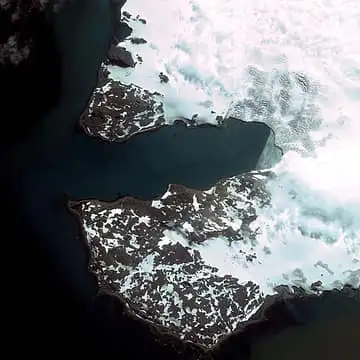
King Sejong Station
Antarctica · Antarctica
Korea’s first Antarctic research station, on the Barton Peninsula of King George Island, near gentoo and chinstrap penguin colonies.
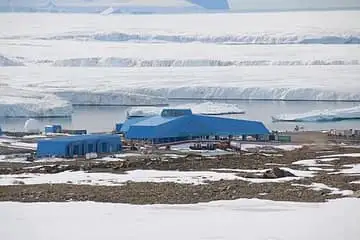
Jang Bogo Station
Antarctica · Antarctica
Korea’s second Antarctic station and its first on the mainland; the three-winged main building is shaped to shed wind and drifting snow.
Animals in Antarctica
Places to discover in Antarctica
Questions
Which continent is Antarctica in?
Antarctica is in Antarctica.
How big is Antarctica?
Antarctica covers about 14,200,000 km².
What are the most famous landmarks in Antarctica?
Some of the best-known landmarks in Antarctica are McMurdo Station, Amundsen–Scott South Pole Station, Vostok Station, Halley VI Research Station and Concordia Station. My Earth Toy has 7 landmarks from Antarctica on its free 3D globe, each with a photo and quick facts.
Which animals can you find in Antarctica on My Earth Toy?
On the globe you can find Chinstrap penguin in Antarctica.
Sources
Updated: 2026-10-30