
Mongolia: landmarks, animals & facts for kids
1 landmark · 6 animals
Mongolia on My Earth Toy, the free 3D toy globe for kids: 1 landmark, 6 animals. Here you can see its flag, capital and size, then fly to every place on the globe.
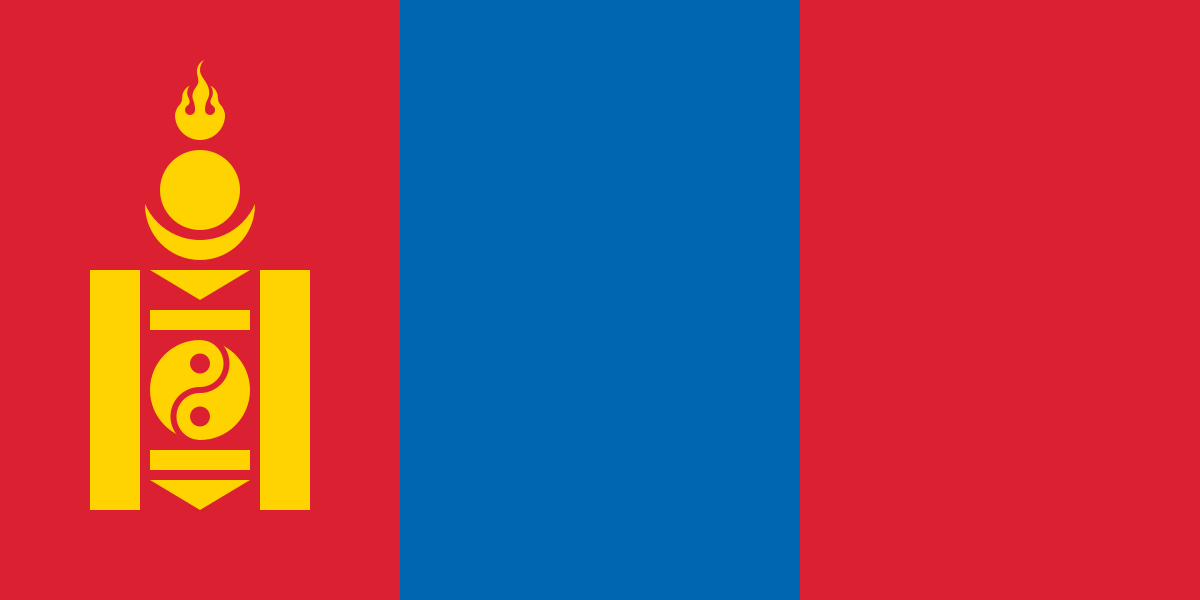
Mongolia's flag has three upright stripes, red, blue and red, with a golden symbol called the Soyombo on the red stripe nearest the pole.
Read about this flag →Mongolia at a glance
- Capital
- Ulaanbaatar
- Continent
- Asia
- Area
- 1,564,110 km²
- Population
- 3.5 million
Mongolia is a large landlocked country in East Asia, sandwiched between Russia to the north and China to the south. Its capital, Ulaanbaatar, is the coldest national capital in the world. Mongolia is the most thinly populated independent country on Earth, a land of wide grassy steppes, the Gobi Desert, snowy mountains and huge blue skies. Many Mongolians still live as herders, moving with their animals and living in round felt tents called gers.
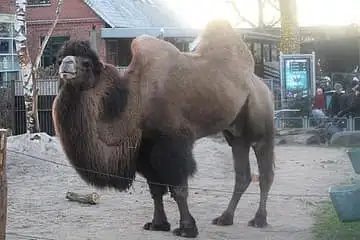
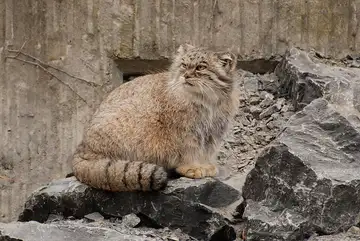
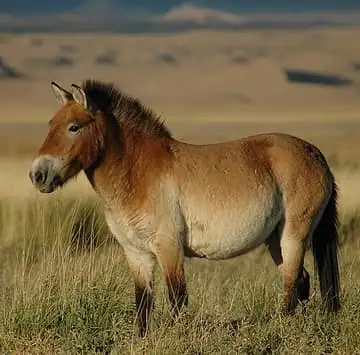
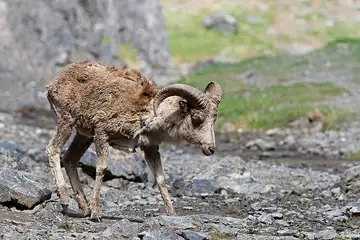
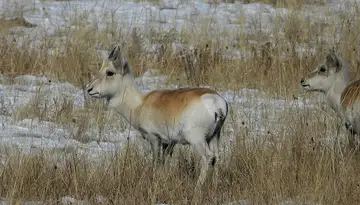
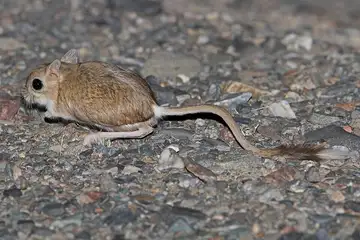
On My Earth Toy you can see the giant stainless-steel Genghis Khan Equestrian Statue on the steppe east of Ulaanbaatar. Look for the two-humped Bactrian camel, the fluffy Pallas's cat, Przewalski's horse, the argali, the Mongolian gazelle and the long-eared Gobi jerboa.
Geography and nature
Mongolia sits high on a plateau. The Altai Mountains rise in the west, where Khüiten Peak reaches 4,374 metres, while the south is covered by the Gobi, a cold desert of gravel plains and sand dunes. In the north, Lake Khövsgöl is a deep, clear lake surrounded by forest. Winters are extremely cold and summers short. The Gobi is one of the world's richest places for dinosaur fossils, and Przewalski's horses, once gone from the wild, have been returned to Mongolian grasslands.
People, languages and culture
The official language is Mongolian, usually written in Cyrillic letters, though the beautiful traditional Mongolian script, written top to bottom, is taught in schools. Many people follow Tibetan Buddhism, and old shamanic beliefs also continue. Every summer the Naadam festival celebrates the three manly games of wrestling, horse racing and archery. Mongolians are famous for throat singing, which lets one singer produce two notes at once, and for the horsehead fiddle, the morin khuur. Buuz, steamed meat dumplings, are a favourite food.
History in a nutshell
Nomadic peoples such as the Xiongnu lived on the steppe more than 2,000 years ago. In 1206 Temüjin united the Mongol tribes and took the title Genghis Khan. His Mongol Empire became the largest connected land empire in history, and his grandson Kublai Khan ruled China. Later Mongolia came under the Qing dynasty. It declared independence in 1911, and from 1924 it was a communist state closely tied to the Soviet Union. A peaceful democratic revolution took place in 1990.
Fun facts
- The first nests of dinosaur eggs recognised by scientists were found in the Gobi Desert in 1923.
- Mongolia has more horses than people.
- Children in Naadam horse races are often only about 5 to 12 years old, and the races can be up to around 30 kilometres long.
- The Genghis Khan Equestrian Statue is about 40 metres tall, and visitors can walk up to a viewing platform on the horse's head.
Famous landmarks in Mongolia
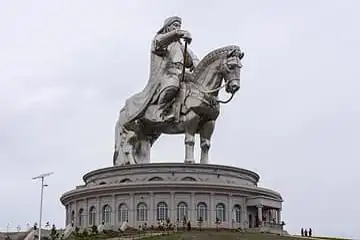
Genghis Khan Equestrian Statue
Mongolia · Asia
A 40 m stainless-steel statue of Genghis Khan on horseback, the largest equestrian statue in the world.
Animals in Mongolia
Questions
What is the capital of Mongolia?
The capital of Mongolia is Ulaanbaatar.
Which continent is Mongolia in?
Mongolia is in Asia.
How big is Mongolia?
Mongolia covers about 1,564,110 km².
How many people live in Mongolia?
About 3.5 million people live in Mongolia.
What are the most famous landmarks in Mongolia?
On My Earth Toy's free 3D globe, the landmark from Mongolia is Genghis Khan Equestrian Statue, with a photo and quick facts.
Which animals can you find in Mongolia on My Earth Toy?
On the globe you can find Bactrian camel, Pallas's cat, Przewalski's horse, Argali and Mongolian gazelle in Mongolia.
Sources
Updated: 2026-10-30