
The rocket from “A Trip to the Moon”
「달세계 여행」 포탄 로켓
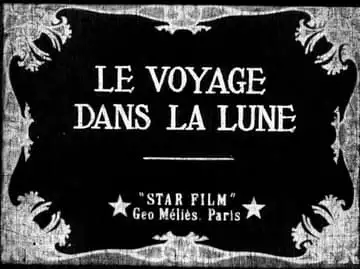
In Georges Méliès’s 1902 film “A Trip to the Moon”, a capsule fired from a giant cannon lands smack in the Man in the Moon’s eye. It is one of the very first science-fiction films.
See it on the 3D Moon →At a glance
- Where
- From the movies
- 🎬 Film
- A Trip to the Moon (1902, Georges Méliès)
- Coordinates
- 18.00°N 8.00°W
- Kind
- Stories
A Trip to the Moon (Le Voyage dans la Lune) is a French silent film made in 1902 by Georges Méliès. He wrote, directed and produced it, and he also acted in it as Professor Barbenfouillis, the leader of a group of astronomers who fly to the Moon. The film lasts only about 9 to 18 minutes, depending on how fast it is played, but it is one of the earliest science-fiction films ever made.
Its most famous moment is pure fun: a capsule fired from a giant cannon lands smack in the eye of the Man in the Moon. That single picture has been copied and joked about for more than a hundred years. The film was a big hit in France and the United States, and today it is seen as a milestone in the history of cinema and special effects.
The story
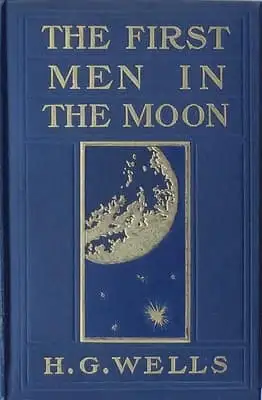
Méliès said his ideas came from Jules Verne’s novels From the Earth to the Moon and Around the Moon. Historians think H. G. Wells’s novel The First Men in the Moon, published just before, may have inspired him too. In the film, the astronomers explore the Moon, meet insect-like Moon people called Selenites, escape back to Earth and splash down in the sea. It is a playful fantasy, not real science: no one could survive being fired from a cannon, and the Moon has no air to breathe.
How the tricks were made
Méliès was a pioneer of film tricks. To make things appear or vanish, he stopped the camera, changed the scene and started again, joining the pieces so smoothly that it looked like magic. He filmed several layers on top of each other to show the capsule splashing into the ocean. To make the Man in the Moon seem to rush toward the audience, he moved the actor’s chair toward the camera on a ramp with pulleys. The film cost 10,000 francs and took about three months to make.
Lost and found in colour
Most copies were black and white, but some were coloured by hand, frame by frame. After Méliès’s career faded, the film was largely forgotten, then rediscovered in the late 1920s. In 1993, a hand-coloured print was found in Spain and given to the Filmoteca de Catalunya, but it was badly decayed. Experts spent years saving its roughly 13,000 fragile frames. The restored colour version premiered at the 2011 Cannes Film Festival with new music by the French band Air.
Fun facts
- The famous rocket-in-the-eye shot is a joke on the French phrase for hitting the bullseye.
- Méliès played the lead astronomer himself, as well as writing and directing the film.
- A hand-coloured copy found in Spain in 1993 took more than a decade to restore.
- The film cost 10,000 francs and was shot in about three months.
On the 3D Moon
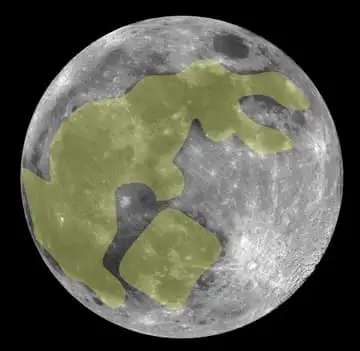
On the 3D Moon you can find the film’s bullet-shaped rocket stuck on the near side, as a nod to the famous shot. Open its card to read about the 1902 film by Georges Méliès.
More on the Moon

Sources
- Read more on Wikipedia
- A Trip to the Moon — Wikipedia
- ‘A Trip to the Moon’: The world’s first sci-fi — SBS
- The First Men in the Moon — Wikipedia
Updated: 2026-10-19