
Famous landmarks in New Zealand
9 landmarks · 4 animals · 5 places to discover
New Zealand on My Earth Toy, the free 3D toy globe for kids: 9 landmarks, 4 animals, 5 places to discover. Here you can see its flag, capital and size, then fly to every place on the globe.
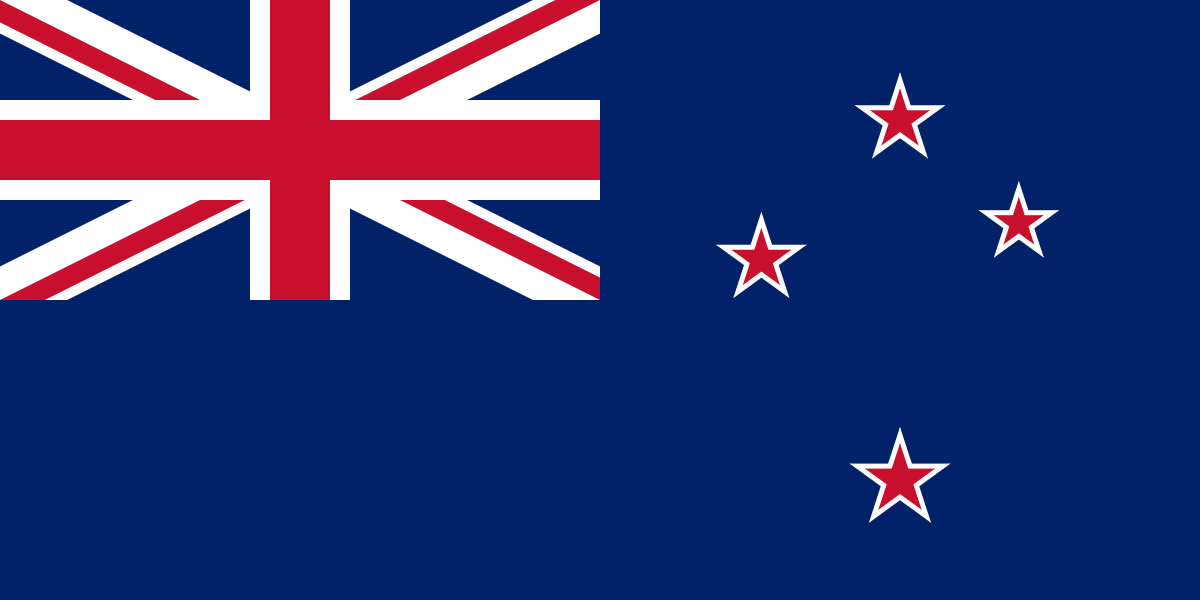
New Zealand's flag is dark blue with the British Union Jack in the top corner and four red stars with white borders on the right, showing the Southern Cross.
Read about this flag →New Zealand at a glance
- Capital
- Wellington
- Continent
- Oceania
- Area
- 268,021 km²
- Population
- 5.2 million
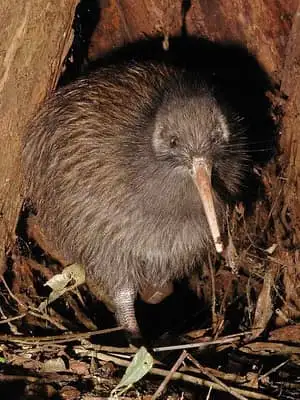
New Zealand, called Aotearoa in Māori, is an island country in the southwest Pacific Ocean, about 2,000 kilometres southeast of Australia. It has two main islands, the North Island and the South Island, plus many smaller ones. Its capital is Wellington, the southernmost capital of any independent country, and its largest city is Auckland. New Zealand is known for Māori culture, snowy mountains and fjords, volcanoes and geysers, sheep farms, the kiwi bird and rugby.
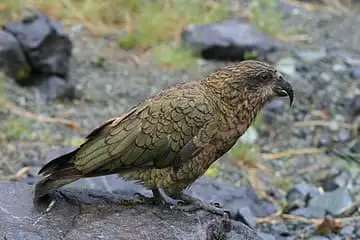
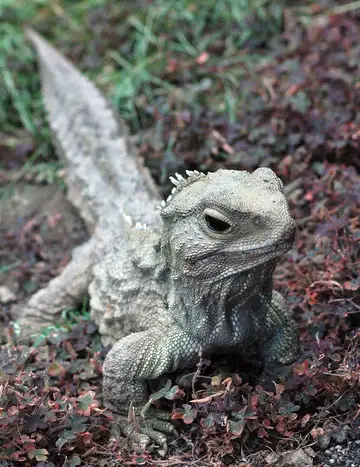
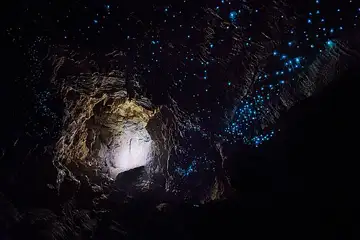
On My Earth Toy you can visit Milford Sound with Mitre Peak, Auckland's Sky Tower and War Memorial Museum, the Hobbiton Movie Set, the Waitangi Treaty Grounds, the Beehive parliament building, ChristChurch Cathedral and more. Look for the kiwi, the cheeky kea parrot, the tuatara and the giant weta, and discover the glowworms of Waitomo.
Geography and nature
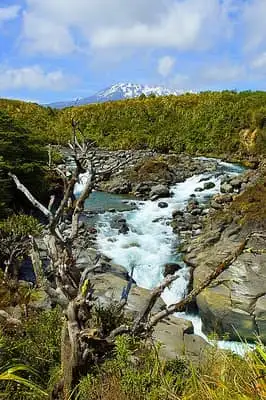
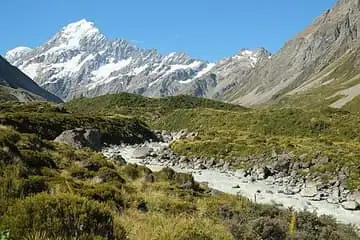
The Southern Alps run down the South Island, topped by Aoraki/Mount Cook at 3,724 metres, with glaciers and deep fjords in Fiordland. The North Island has active volcanoes such as Ruapehu and Tongariro, and around Rotorua geysers and mud pools steam and bubble. Because New Zealand was isolated for so long, its only native land mammals are bats, and birds took many of their roles: flightless kiwi, kākāpō and the extinct giant moa. The tuatara is the last survivor of an ancient group of reptiles.
People, languages and culture
New Zealand has three official languages: English, Māori (te reo Māori) and New Zealand Sign Language. Most people have European ancestry, and there are large Māori, Pacific Island and Asian communities. Māori culture is an important part of national life, from the marae, a meeting ground, to the haka, a ceremonial dance performed by the All Blacks rugby team before matches. New Zealanders are often called Kiwis, after the national bird, and love the outdoors, from tramping (hiking) to sailing.
History in a nutshell
Polynesian voyagers, the ancestors of Māori, arrived by canoe around 1250 to 1300, making New Zealand one of the last large lands on Earth to be settled by people. The Dutch explorer Abel Tasman sighted it in 1642, and James Cook mapped its coasts from 1769. In 1840, the Treaty of Waitangi was signed between the British Crown and many Māori chiefs, and British settlement grew quickly. New Zealand became a dominion in 1907 and gradually took full control of its own affairs.
Fun facts
- In 1893, New Zealand became the first self-governing country where women could vote in national elections.
- New Zealander Edmund Hillary and Tenzing Norgay made the first confirmed climb of Mount Everest in 1953.
- A hill in Hawke's Bay has one of the longest place names in the world, an 85-letter Māori name.
- Giant weta are among the heaviest insects in the world, with some heavier than a mouse.
Famous landmarks in New Zealand
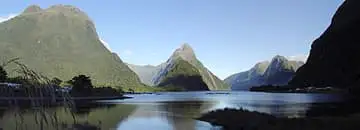
Milford Sound (Mitre Peak)
New Zealand · Oceania
A dramatic fiord of sheer cliffs and waterfalls, dominated by the peak of Mitre Peak.

Weta Cave, Wellington
New Zealand · Oceania
The visitor space of Wētā Workshop, the studio behind props and effects for The Lord of the Rings.
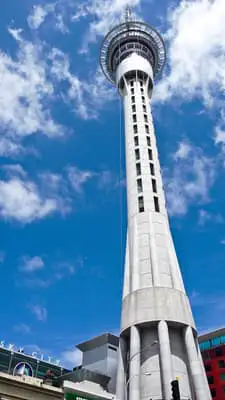
Sky Tower
New Zealand · Oceania
One of the tallest free-standing structures in the Southern Hemisphere, famous for its SkyJump.
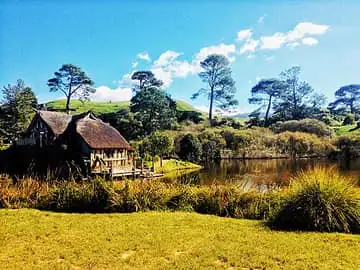
Hobbiton Movie Set
New Zealand · Oceania
The film set of The Lord of the Rings and The Hobbit, with hobbit holes built into green hills.
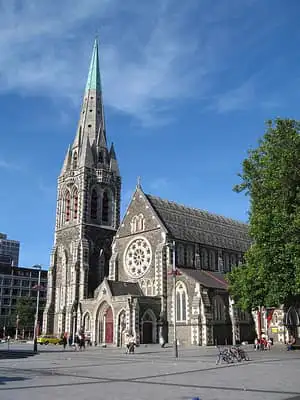
ChristChurch Cathedral
New Zealand · Oceania
The Gothic Revival Anglican cathedral at the city's heart, badly damaged in the 2011 earthquake.
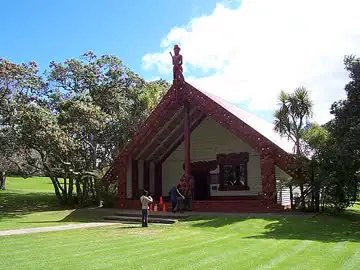
Waitangi Treaty Grounds
New Zealand · Oceania
Where the Treaty of Waitangi was signed by the British Crown and Māori chiefs on 6 February 1840, with the 1834 Treaty House, the carved meeting house Te Whare Rūnanga (1940) and the flagstaff marking the signing site.
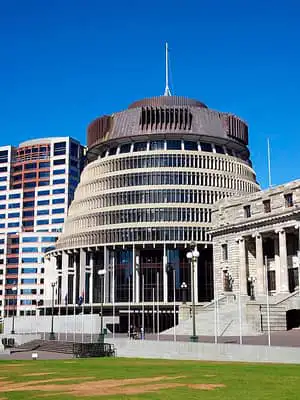
The Beehive, Wellington
New Zealand · Oceania
The round, beehive-shaped executive wing of New Zealand's Parliament Buildings.
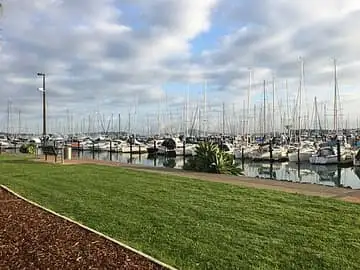
Half Moon Bay Marina, Auckland
New Zealand · Oceania
A large marina on the Tāmaki River estuary in east Auckland, opened in 1972; more than 500 yachts and launches berth on its floating pontoons behind the breakwater, and ferries run from here to the city centre.
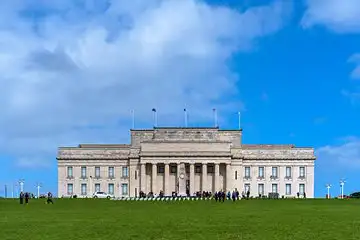
Auckland War Memorial Museum
New Zealand · Oceania
A 1929 Neoclassical temple on the Auckland Domain hill with a Parthenon-inspired Doric portico; it holds major Māori and Pacific collections and is the city's war memorial.
Animals in New Zealand

Places to discover in New Zealand
Questions
What is the capital of New Zealand?
The capital of New Zealand is Wellington.
Which continent is New Zealand in?
New Zealand is in Oceania.
How big is New Zealand?
New Zealand covers about 268,021 km².
How many people live in New Zealand?
About 5.2 million people live in New Zealand.
What are the most famous landmarks in New Zealand?
Some of the best-known landmarks in New Zealand are Milford Sound (Mitre Peak), Weta Cave, Wellington, Sky Tower, Hobbiton Movie Set and ChristChurch Cathedral. My Earth Toy has 9 landmarks from New Zealand on its free 3D globe, each with a photo and quick facts.
Which animals can you find in New Zealand on My Earth Toy?
On the globe you can find North Island brown kiwi, Kea, Tuatara and Giant weta in New Zealand.
Sources
Updated: 2026-10-30